Fry the Coop began as a small fried chicken shop in Chicago with no sign, no budget, and no foot traffic. Today it pulls in about $1.25 million in monthly sales across 10 locations and serves more than a million guests a year. Founder Joe built the brand on a single core idea: make one great chicken sandwich and make it the same way, every time. This article traces the journey, the method behind the food, the numbers behind the growth, and the lessons that shaped the company.
Origins: A Leap from Cubicles to Fryers
Joe worked in a cubicle for years. He loved food and wanted to build something around that passion. He decided to focus on fried chicken because it brought him back to childhood dinners when his dad would bring home boxes of hot, crispy chicken. The memories stuck. The sandwich format sealed the plan. In 2017, he opened the first Fry the Coop location, betting almost everything on one item.
He started with $2,000 in savings. He asked his mother for help and borrowed $21,000, which was all she had in the bank. Total startup capital came to about $63,000. He paid his mom back in six months. The first store launched on a tight budget. The walls were bare. The furniture clashed. Staff wore plain aprons. There was no sign on the building. It was quiet at first. Joe hit the streets to get customers through the door.
“I had $2,000 to my name and I had no idea what I was doing.”
The early months brought one key turning point. A well-known local food critic visited unannounced. The first impression was poor due to a prep error. The critic called the food “awful” and said there would be no segment. Two days later, he changed his mind and returned with a film crew. The second taste was a hit. When the segment aired, lines formed around the block. For three months, the store sold out daily. From that point, traffic and word-of-mouth took off.
One Sandwich, Many Details
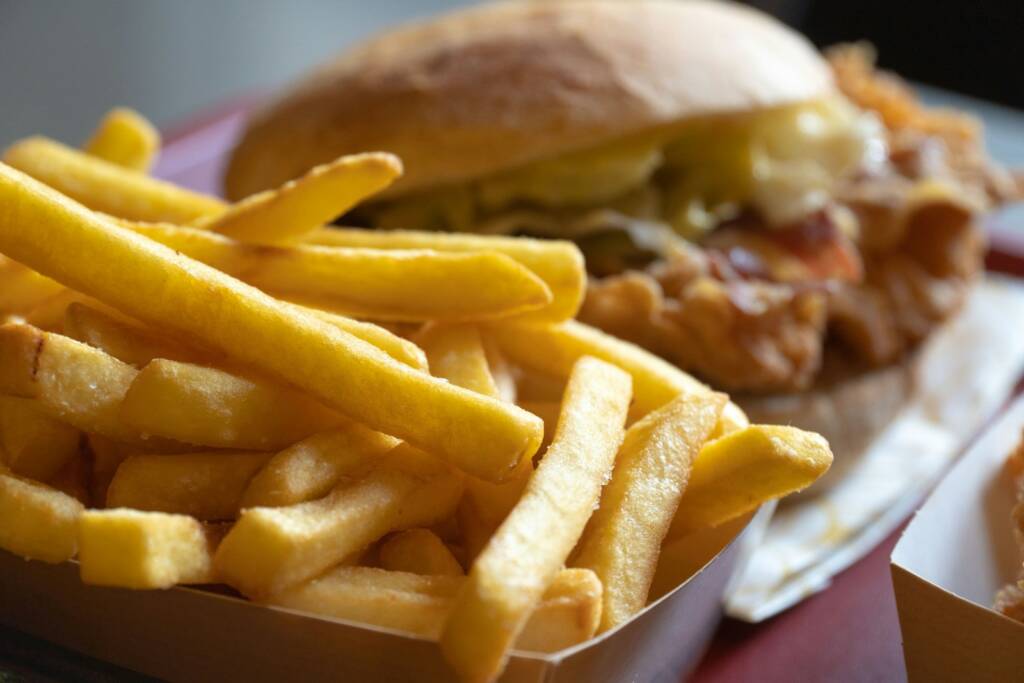
Fry the Coop sells around 20,000 chicken sandwiches each week across its stores. The lead item is the Nashville Hot Chicken Sandwich. The build is simple, but the technique is exact. The process starts before a single sandwich is assembled. Chicken breasts are brined in salt water to help them stay juicy. The team then tenderizes the meat and seasons it. Pieces are dipped in buttermilk so the breading sticks. They are dredged thoroughly and pressed so the coating holds and forms ridges and crags after frying.
Then comes the two-step fry. First, the chicken is blanched at 300°F for about five minutes to cook the meat through and lock in moisture. After cooling, pieces are fried to order at 350°F for about three minutes to finish the crust. The shop uses 100% beef tallow, not seed oil. The oil has a high smoke point of around 400°F. Oil is filtered and replaced weekly.
After frying, Nashville Hot pieces get “baptized” in seasoned beef tallow. Heat levels range from mild to medium, hot with ghost pepper, and a very hot option with Carolina Reaper. The sandwich sits on a butter-toasted brioche bun from a local bakery. A house sauce is portioned by a dispenser to keep every sandwich the same. Four pickles are placed so each bite gets one. Coleslaw adds crunch, acid, and a hint of honey for balance. The team avoids smashing the finished sandwich, which helps preserve the texture and height.
“We fry them. Nobody does that anymore.”
The method is strict. The result is consistent. Joe likes to say a sandwich is only as good as its bun. The buns get the same care as the chicken. Each is spread with real butter and toasted until it looks “like a perfect grilled cheese.” The finish matters. The presentation should feel like opening a present. The thick end of the chicken breast should face the guest so the first view is generous and bold.
Centralized Prep for Consistency
The company began by prepping chicken in each location. That changed. Breading and most prep now run through a centralized kitchen. The shift was about quality control and speed. A single team can manage brining, tenderizing, seasoning, and breading to a repeatable standard. Stores then handle the final fry and assembly. The approach reduces variation and allows faster training.
Even with centralization, the kitchen has bottlenecks. Blanching at scale takes time and fryer space. A row of five fryers can feel tight during rushes. The company is building a commissary that will increase frying capacity by a factor of six. That infrastructure will support more stores while keeping the process the same.
Why Beef Tallow?
Beef tallow is the most expensive oil in the shop’s budget. Joe estimates the company spends about $600,000 a year on it. He chose tallow after learning that fast-food fries once cooked in it and that many people miss the taste. He says the flavor is cleaner and that certain breakdown products from seed oils do not appear in tallow at the temperatures his team uses. The oil’s higher smoke point suits the method. The kitchen blanches at 300°F and fries to order at 350°F, which stays under the threshold. Tallow is filtered daily and fully changed once a week.
“Once I found out about that, I was like, ‘Oh, we’re going all in.’”
Tallow also plays a role in the signature Nashville finish. The seasoned “dip” clings to the crust after the final fry. It gives the chicken its red sheen, extra heat, and a rich, savory note that stands out.
Menu Discipline: Do Less, Do It Better
Fry the Coop keeps the core menu short. The top seller by far is the Nashville Hot Chicken Sandwich. The second best seller is the Spicy Honey Butter, which is nothing more than whipped spicy honey butter, chicken, and a bun. The third is the Chicken and Cheese, which swaps coleslaw for two slices of American cheese.
Joe believes in limiting offerings. He warns about “menu fatigue” on both sides of the counter. Guests get overwhelmed with too many choices. Staff struggle to keep everything perfect. He tests new ideas with limited time offers. If something wins, he considers a permanent slot. But the heart of the business remains one excellent sandwich.
“Be great at the one thing that you do, nail that one thing, and keep the discipline to keep a small menu.”
Training, Hiring, and Hard Lessons
Joe’s first two hires set the tone: a chef and a bookkeeper. He committed to a $50,000 chef’s salary without knowing where the money would come from because he lacked kitchen operations experience. The chef helped build and maintain kitchen systems. The bookkeeper tracked cost of goods, margins, and sales from day one. That early discipline anchored the business as it grew.
Training is a daily habit. Managers audit stores often. Processes are documented and reinforced. Joe learned to run background checks after one bad hire. A manager candidate had a serious crime in his past at a different brand. The team did not screen and brought him on. That changed hiring for leadership roles. Now, background checks are standard for managers.
There have been culture shocks too. One group of high school employees organized an after-hours “fight club” inside a store. The organizers were fired. Several friends quit in protest. Joe wrote about it in an email to customers as a cautionary tale and a window into the messier side of running a youth-heavy workforce. Clear rules and steady oversight remain a focus.
Service Rituals That Drive Word-of-Mouth
Word-of-mouth fuels the brand as much as the food. Joe speaks often about how guests should feel when they walk in. The greeting is immediate. The farewell is purposeful. Staff use each guest’s name when handing off orders.
“We’re not counting heads. We’re counting hearts.”
That language shows up in the company’s standard procedures. He sees hospitality as a repeatable craft, not a soft skill left to chance. When the basics are consistent, like eye contact, names, and a warm handoff, people remember. Many then post photos, tell friends, and bring others back for a first visit.
Storytelling Over Ads
The company’s paid advertising is small compared to many brands. Joe leans on social media and an email list. He sees storytelling as the most direct path to attention. He writes about startup struggles, kitchen wins, hiring mistakes, and life in the stores.
“No one is coming to tell your story for you. So you have to tell your story.”
The email list has more than 150,000 subscribers. It grew through website offers, grand opening giveaways, and community events. New stores launch with free-food promotions tied to sign-ups and a password at the door. He sends one email each week. The company tracks revenue from those sends using point-of-sale data. Joe says a single email can bring in $30,000 to $50,000 in sales. Over a month, email-driven sales can top $100,000.
Growth in the list is part of the company’s value. The team uses the POS to connect credit cards with emails, which helps calculate how often guests return and how much they spend after reading. He believes that customer data can influence a company’s valuation as much as unit count or equipment.
The Numbers: Margin, Payroll, and Scale
Across 10 restaurants, monthly sales sit around $1.25 million. Food costs run about 25%, or roughly $315,000 per month. Payroll is the biggest expense at about 35%, or $440,000. Fixed costs, such as utilities, services, and other overhead, collectively add about $250,000. The company spends around $20,000 on marketing, including a small social media team and a publicist. With that structure, net profit lands near 10% of sales, or about $125,000 per month.
The percentages matter. COGS sits near industry targets. Payroll is on the higher side, but the team believes it supports training and service standards that set the brand apart. Fixed costs rise with more units, but shared processes and a coming commissary aim to absorb some of that pressure. Oil is a large direct cost at an estimated $600,000 per year. Joe views it as non-negotiable due to flavor and method.
Ownership is mixed. The company leases some locations and owns others, but still pays rent through mortgages or holding structures. On the entity side, Joe admits to early legal structure mistakes. Some locations were set up as S corporations while the holding company was a partnership. He would choose partnerships for the LLCs if he could redo that decision.
Design and Neighborhood Ties
Each store reflects its area. The team works with local historical societies. They fill walls with vintage photos and neighborhood stories. That approach helps a new shop feel like it belongs, rather than a copy-and-paste location. It also sparks conversations among guests while they wait. People see familiar streets, old businesses, and faces from the past. It sets a mood that pairs with the food and adds to community roots.
Chicken and Waffles: A Signature Plate
While the menu is tight, one special dish stands out: Nashville hot chicken and waffles. It features two large tenders at any heat level, a fresh waffle cooked to order, bacon baked inside, powdered sugar, hot syrup, and a spread of whipped spicy honey butter. Guests pour the warmed syrup and let the butter melt over the chicken. The dish offers a sweet-salty-spicy mix in each bite. Joe credits an early chef hire with developing the recipe after Joe insisted on adding a chicken-and-waffle item that felt unique.
The dish carries one of the highest food costs. Joe estimates around $5 in ingredients, excluding labor and overhead. The price sits near $16.19. It is labor heavy, but it delights regulars and gives newcomers a second path into the menu. The company keeps it because it is distinct and memorable, even if its margin is slimmer than the core sandwich.
A Head-to-Head Taste Test
During a recent visit, an on-camera challenge pitted Joe against host Paul to see who could make the best sandwich. Both used the same steps. The chicken was seasoned, blanched, fried to order, dipped in seasoned tallow, and placed on a butter-toasted brioche with house sauce, four pickles, and coleslaw. Presentation counted as much as flavor. The judge, Zohn, tasted both entries blind. He noted the spice difference, suspecting one was mild and the other medium. In the end, he picked Joe’s sandwich by a small margin. Technique and heat balance made the difference.
Scaling the Process
Joe aims to open 75 stores across Chicagoland in ten years. That plan requires discipline in five areas:
- Centralized prep to ensure uniform brining, breading, and quality control.
- Two-stage frying with strict timing and temperatures for consistent juiciness and crunch.
- Menu focus, anchored by one core sandwich and tested with limited-time offers.
- Training loops and audits that refresh standards across locations every week.
- Own-the-story marketing through social channels and a weekly email that drives measured sales.
The company will need more frying capacity, which is why the commissary matters. The build-out is planned to multiply output sixfold. That will ease the blanching bottleneck and free stores to handle the to-order fry and assembly at speed.
Keys to Repeatable Excellence
Fry the Coop’s rise rests on a few simple beliefs that shape every task in the kitchen and on the line. Joe repeats them often to his team.
First, consistency beats creativity in daily service. It is better to make the same great sandwich all day than to rotate through a dozen untested specials. That is why the company uses a sauce gun for portion control and why four pickles go on every sandwich, placed to match each bite. The toast on the bun is a target state. The finish counts.
Second, the little moments with guests matter. Greet first. Say goodbye every time. Use the guest’s name. These are small acts, but they build a feeling that lasts longer than the last bite. Third, tell the truth about the work. Share a store’s hiccups and wins with customers. That honesty invites people to follow along and root for the brand.
Fourth, invest in the gaps. Joe hired a chef because he lacked high-volume kitchen experience. He hired a bookkeeper to avoid flying blind on costs. Training is constant because skills fade and turnover is real. They conduct background checks for managers because one bad event taught a costly lesson.
Fifth, gather and use data. The email list is not just a list. It is a way to track real behavior and tie communications to repeat visits. It is also a direct line to customers during new store openings or limited-time offers.
From Empty Dining Room to Million-Plus a Month
November 1, 2017, looked nothing like the Fry the Coop of today. The store had no sign, mismatched furniture, and only a handful of first-day guests. Joe had a 25-year lease and no clear path to break-even. He pushed for press, reached out to critics, and rolled the dice. The first critic’s call could have ended the story. Instead, the second look redeemed the food. The phones rang. The lines formed. The system held. From that stretch, the company built a base that now supports more than 25,000 guests each week.
The growth was not magic. It came from taste first. The sandwich had to be good enough to bring people back. It came from visible care with every plate. Whether it was the house sauce, the pickles, the coleslaw, or the buttered toast each element had a reason. It came from a firm stance on oil and process. It came from telling the brand’s story in public, week after week. And it came from admitting mistakes and tightening systems so they do not repeat.
What the Next Decade Could Look Like
The goal of 75 stores is bold. New units bring risks: quality drift, training gaps, slower service, and supply hiccups. Joe’s plan leans on infrastructure to fight those risks. The commissary will standardize prep. The centralized breading and blanching will protect quality. Audit loops and training teams will move from store to store. Digital tools will track engagement and sales from weekly emails. The menu will stay tight so staff can hit the same marks at speed. If they hold to these principles, more units should add scale without eroding the guest experience that made the brand.
Key Takeaways
- Focus wins: one killer sandwich, made the same way every time, can build a large business.
- Two-stage frying in beef tallow locks in juiciness and creates a crisp, flavorful crust.
- Centralized prep and strict portioning drive consistency across multiple locations.
- Storytelling and email marketing can power growth with minimal ad spend when tracked to sales.
- Training, background checks, and audits turn lessons into lasting standards.
- Margins are built on details: watch COGS, payroll, fixed costs, and stick to a tight menu.
Fry the Coop shows how a clear idea, precise execution, and daily storytelling can carry a brand from an empty dining room to a citywide favorite. The line outside begins with that first bite of hot, crispy chicken and a soft, buttered bun. But it holds because the people in line feel noticed and welcomed, and because each visit tastes just like their last great one. As the company grows, the challenge will be to protect those small things at a larger scale. The plan is in place. The process is proven. If the team keeps the discipline that built the brand, they have a real chance to meet their ten-year goal.
Frequently Asked Questions
Q: What makes the Nashville Hot Chicken Sandwich stand out?
It starts with a saltwater brine and careful tenderizing. The chicken is breaded, then blanched at 300°F, cooled, and fried to order at 350°F in 100% beef tallow. A dip in seasoned tallow adds the signature Nashville flavor. The sandwich is finished on a butter-toasted brioche bun with house sauce, four pickles, and coleslaw for balance.
Q: Why does Fry the Coop use beef tallow instead of seed oils?
The team says tallow delivers cleaner flavor and holds up well under heat due to a high smoke point near 400°F. They blanch at 300°F and fry to order at 350°F, which suits tallow. The oil is filtered daily and replaced weekly to maintain quality. While more expensive, they view it as essential to taste and texture.
Q: How does the company keep quality consistent across multiple stores?
They centralized prep for brining, tenderizing, seasoning, and breading. Stores handle the final fry and assembly with strict timing and portioning. Training is constant, with audits and refreshers each week. A commissary coming online will boost capacity and standardize even more steps before items reach the stores.
Q: How did Fry the Coop build an email list that drives sales?
They offered sign-up incentives on the website, gave away food at grand openings with a sign-up requirement, and share weekly stories and updates. Their POS links purchases to emails, so they can see the sales impact of each send. A single campaign can produce tens of thousands in revenue, and their monthly email-driven sales can top six figures.