By Yumna Iftikhar
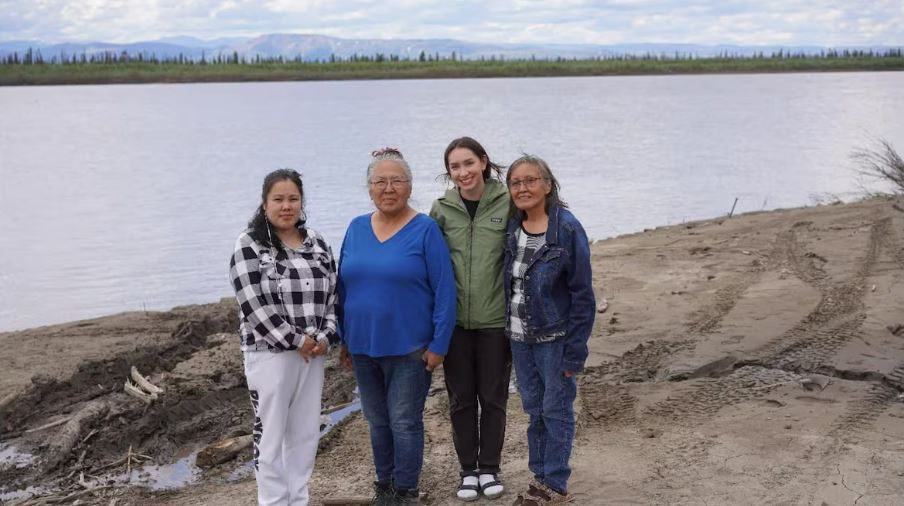
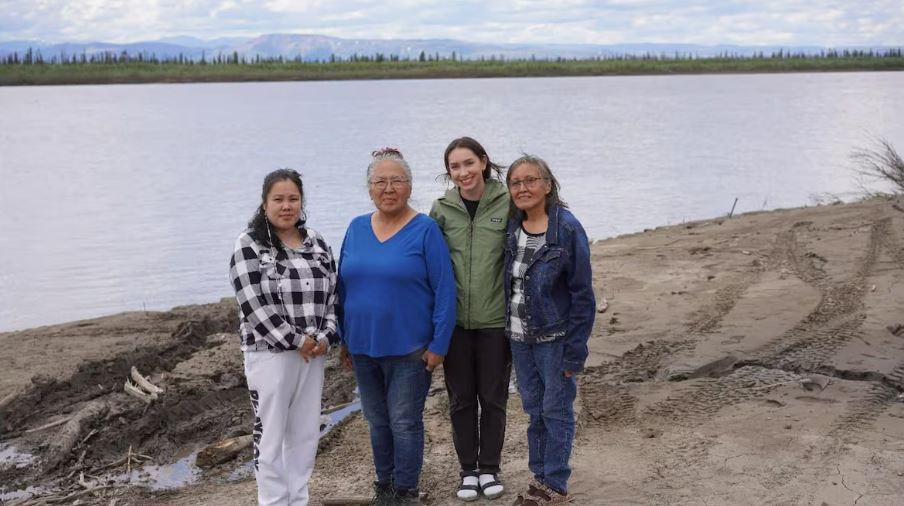
When Annie Buckle was growing up in Aklavik, she said wild berries were so abundant that they would be enough to feed a family.
But today, as an elder, she said hotter and drier weather is resulting in fewer berries across many picking spots.
“I would go and it was just dry and there were hardly any berries,” Buckle said. “I had to do a lot of walking to check for these berries in different areas.”
Buckle isn’t the only one.
A new study finds that berry pickers in the Gwich’in Settlement Area are reporting identical experiences.
Published in May in the scientific journal Botany, the paper focuses primarily on wild berry species used for food and medicine. That includes cranberries, blueberries, and yellowberries.
Claire Singer from Yellowknife is one of the lead authors of the paper. She said the study is part of a broader initiative to document Indigenous knowledge of berries throughout the territory.
Buckle, who also participated in the study, said the project is a way to share the knowledge among others in the territory and pass it down to future generations.
Some berry pickers can feel isolated thinking they might be the only ones experience the decline in quality and quantity, she said. The project allows them to realize people across the territory are facing the same issues and lets them learn from each other.
Indigenous knowledge fills the gap
According to the paper, standard scientific monitoring programs have had limited success in mapping out the best places and conditions for wild berries to grow. That’s because scientists usually look at small, isolated areas.
Singer said Indigenous berry pickers and knowledge holders already have the big-picture regional data that researchers are missing.
She added that their generational knowledge can help figure out whether changes in berry production are due to temporary dips or a larger trend caused by climate change.
“We don’t have a lot of that knowledge that exists in communities written down. So this was a really important step in building our understanding broadly about how berries are doing in the N.W.T.,” she said.
To gather the data, the research team interviewed experienced berry pickers in Aklavik, Inuvik, Fort McPherson, and Tsiigehtchic.
During the interviews, knowledge holders described declines in the condition, size and overall yield of the berries during hotter and drier seasons.
Some reported seeing fruit and flowers drying up or rotting earlier in the season than they did in the past
Climate change isn’t just affecting the plants; it is also cutting off access to them, researchers heard.
Interviewees said rivers that are often used to access berry picking spots are now drying up early, reducing opportunities to revisit spots used in the past.
Conserving the berries
Buckle said going to the land and picking berries is a family activity, one that keeps them connected to the land and provides healing and relaxation.
“My mom and dad used to take us out berry picking to have berries for the winter and share our berries with other people,” she said, adding that she loves making different berry dishes for friends and family.
Declines in berry yields can have consequences for the local pickers and the larger ecosystem, the paper said.
Singer said many animals that communities depend on, including birds, caribou and moose, also consume berries
In the report, knowledge holders suggested several ways to help more people get out on to the land so they can monitor the environment. Those included ensuring safety procedures such as bear monitors are in place, sharing costs like gas and teaching youth on-the-land skills.
Related stories from around the North:
Canada: Prepare for another challenging wildfire season, N.W.T. fire officials say, CBC News
Norway: Northern Norway feels the consequences of record-high fossil fuel emissions, The Independent Barents Observer
Sweden: Sweden’s biggest carbon-capture bet moving ahead while others hit pause, Radio Sweden
Russia: Murmansk trapped in coal dust, The Independent Barents Observer
United States: Alaska wildlife agents can kill bears from helicopters in an effort to protect caribou, judge says, The Associated Press