The Alaska Senate has approved a multibillion-dollar tax cut for the developers of the proposed trans-Alaska natural gas pipeline, but some changes adopted late Friday by the Senate reduced the size of the break.
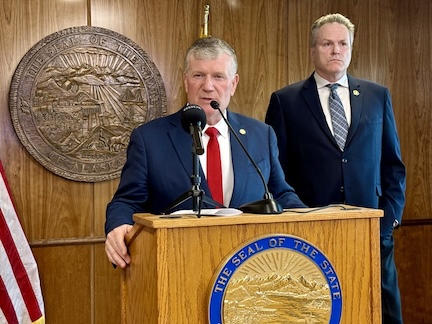
Speaking to reporters after the 12-8 Senate vote, Gov. Mike Dunleavy and House Majority Leader Chuck Kopp, R-Anchorage, said the Senate amendments — unless reversed — likely kill the bill.
“We have to get this project off the ground, and the Senate amendments we just saw did not move us in that direction,” Kopp said. “They moved us in the opposite direction, and they effectively killed the project.”
The Alaska House passed a larger tax break on June 12, and it was not immediately clear on Friday night whether the House will take up the Senate version, seek further negotiations or start from scratch.
A 30-day special session on the gasline expired Friday, but Dunleavy has called a second 30-day session.
The House was scheduled to meet at 10 a.m. Saturday.

Sen. Forrest Dunbar, D-Anchorage and a reluctant vote in favor of the tax cut, said Dunleavy should be happy with the end result and advised the governor to hang up a “Mission Accomplished” banner.
If the governor seeks to reverse the Senate amendments, it isn’t clear whether the bill will have the votes to pass the Senate, he said.
“We passed a bill that protected Alaska and gave him a massive tax cut,” Dunbar said. “I voted for it … and if he strips out a bunch of the stuff that protects Alaskans, I’m not going to vote for it.”
A big project with a big tax break
As currently proposed, Glenfarne is planning to build an 807-mile natural gas pipeline, known officially as Alaska LNG, from the North Slope to Cook Inlet in two separate phases.
The first phase, which would take place no later than 2032 under the Senate bill, involves a pipeline and a small gas-treatment facility on the North Slope to deliver gas to Southcentral Alaska for in-state use.
The second phase, to be completed no later than 2036 under the Senate schedule, would involve construction of a large gas-treatment plant on the North Slope and a facility on the Kenai Peninsula that would allow gas to be exported internationally.
Altogether, Glenfarne has said it expects Alaska LNG to cost between $44.5 billion and $54.5 billion, making it the largest and most expensive natural gas project in the world.
Alaska levies a 2% property tax on oil and gas facilities, with the proceeds split between borough governments and the state.
While Alaska LNG is exempted from that tax during construction, it would be required to begin paying taxes when the first gas is shipped during Phase One.
That’s a problem for Glenfarne, because it won’t begin making money until Phase Two, when large volumes of gas will be sold to foreign customers.
To help the project, Gov. Mike Dunleavy proposed in March to replace the property tax with a tax on gas shipped through the pipeline.
The governor’s proposal did not pass during the regular legislative session, which ended May 20, so Dunleavy called a special session on the issue.
After several revisions, the House voted 34-5 to adopt the gas tax, known formally as the “alternative volumetric tax.”
The tax break adopted by the House would result in a $16 billion reduction through 2062, according to estimates from the Alaska Department of Revenue.
Even with the break, the state would still collect almost $800 million per year from production taxes, royalties and fees, the department has estimated.
Thousands of people would be employed building and operating the pipeline, which also would deliver relatively low-cost gas to the Alaska Railbelt under a provision of the House bill that caps the price of gas.
The Railbelt is facing an impending shortage of domestic gas that has local utilities preparing to import gas from overseas.
Senate amendments were needed to break deadlock
When the House bill advanced to the Senate, lawmakers there balked, with many saying that the House-adopted bill didn’t include enough security for the state or residents.
Over the past 50 years, the state has spent almost $1 billion in failed attempts to build a trans-Alaska gas pipeline.
Alaska natural gas pipeline dreams stretch over half a century
After several days of deadlock, the Senate Finance Committee adopted a revised version of the alternative volumetric tax that includes gradual tax increases over time.
The full Senate then debated the bill, considering and adopting a series of amendments that went beyond what the House passed.
The Senate amendment that drew the most attention would require Glenfarne and the oil firm Hilcorp to pay Alaska’s state corporate income tax, just as companies like ConocoPhillips and Exxon do.
Hilcorp, and Glenfarne — if it were to build the pipeline — would be exempt from the income tax under current law.
In legislative hearings earlier this year, the Alaska Department of Revenue estimated that Glenfarne would pay $466 million per year in corporate income tax if the gas pipeline were built and operated according to plan. Hilcorp would pay between $30 million and $100 million per year; estimates vary.
The tax change isn’t a new idea. The House voted down a Senate-passed version of it earlier this year in a separate bill, and the Senate Resources Committee discussed the idea at length during the regular legislative session.
Ahead of Friday’s vote on the issue, Glenfarne and oil-industry trade groups issued statements against the proposal.
Despite that opposition, the amendment was adopted by an 11-9 vote.
Other amendments followed. One labor-related proposal would require the pipeline builders to pay prevailing wages in the state and employ Alaskans and apprentices. A disclosure amendment would require Glenfarne and developers to disclose their ties to foreign companies.
There were consumer-protection amendments limiting the ability of the Railbelt gas price cap to rise with inflation and prohibiting developers from passing on cost overruns to Alaskans.
Another amendment declared that if pipeline developers abandon their efforts, the project will return to the state at no cost. Glenfarne could not seek a buyout from the state if it decides to not proceed with Alaska LNG.
At the end of the night, the company issued a statement saying, “In contrast to the workable tax reform legislative compromise that passed the House with a bipartisan, 87% vote, many of the amendments passed in the Senate bill tonight, if put into law, would have resulted in an unworkable, unfinanceable, and uncompetitive project, unable to deliver reliable and affordable energy to Alaskans.”
At the end of his news conference, Dunleavy said there are “serious questions about all of the amendments” and he hopes that lawmakers will be ready to start anew on Saturday.