
The Government of Canada has announced the launch of the registration process to designate three major infrastructure projects as “projects of national interest.” This initiative, part of the Building Canada Act, aims to simplify and consolidate federal approvals to accelerate their completion.
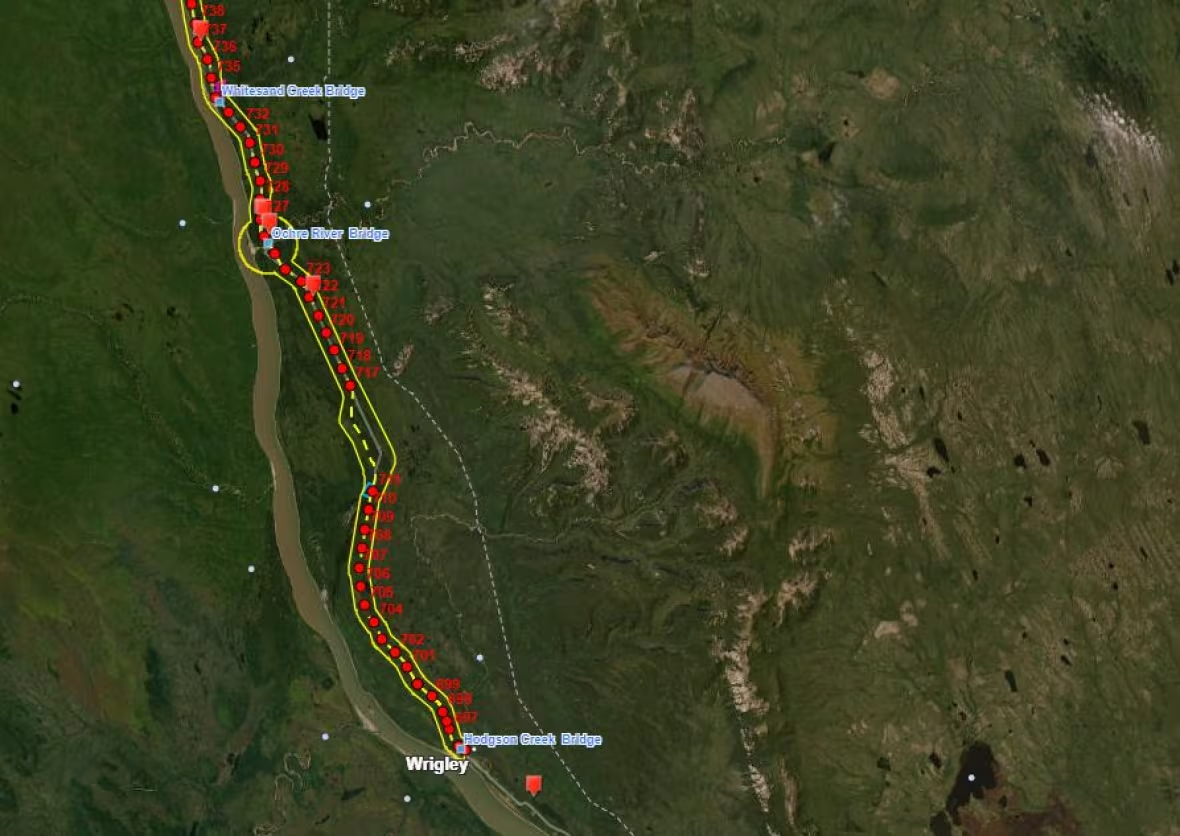
Of the three projects under consideration, two directly impact the Arctic and northern regions: the Mackenzie Valley Highway project and the Grays Bay Road and Port project.
“The Mackenzie Valley Highway and the Grays Bay Road and Port projects have the potential to strengthen transport and trade corridors in the North, create new economic opportunities, and support the long-term prosperity of Northern communities,” said Rebecca Chartrand, Minister of Northern and Arctic Affairs and Minister responsible for the Canadian Northern Economic Development Agency.

The third selected project is the Deep Geological Repository (DGR) for used nuclear fuel, located in northwestern Ontario.
Improving Security and Transportation in the North
Designated as critical infrastructure priorities for Canada and the North, the Mackenzie Valley and Grays Bay projects aim to improve security in the Arctic and strengthen Canada’s presence in the region. They also seek to connect remote and Indigenous communities by improving supply chain reliability, access to services, quality of life, and affordability. Additionally, the projects intend to create trade and transportation corridors to connect Northern goods to national and global markets, and unlock regional economic potential by enabling the exploration and development of new natural resources, particularly critical minerals.
Infrastructure gaps in the North have been ignored for too long. Through the Building Canada Act, our government is stepping up by fast-tracking major projects to connect communities, lower the cost of living, and unlock the full potential of the North,” explained Rebecca Alty, Minister of Crown-Indigenous Relations. “Moving forward, meaningful consultation and partnership with Indigenous rights-holders will be at the heart of our work, every step of the way.”

A Modified Regulatory Framework to Speed Up Construction
Registering these infrastructures under the Building Canada Act (which received Royal Assent in June 2025) would transform the federal regulatory approach.
The focus would shift from whether the project should move forward to how it will be executed.
According to the Major Projects Bureau (MPB), this centralization will reduce the risk of delays and cost overruns for proponents and investors.
For northern projects, however, this acceleration remains conditional on successfully passing treaty-based impact assessment stages and current territorial regulatory processes.
The final goal is to render a definitive decision regarding the official registration of these projects by fall 2026.
Related stories from around the North:
Canada: ‘No way’ feds can ignore need for Mackenzie Valley Highway: N.W.T. premier, CBC News
Denmark: Denmark, Greenland agree to build naval wharf in Nuuk amid growing Arctic focus, Eye on the Arctic
Finland: Finland’s border fence almost ready in Lapland, Yle News
United States: Congress approves measure to overturn Biden-era plan for Alaska petroleum reserve, The Canadian Press