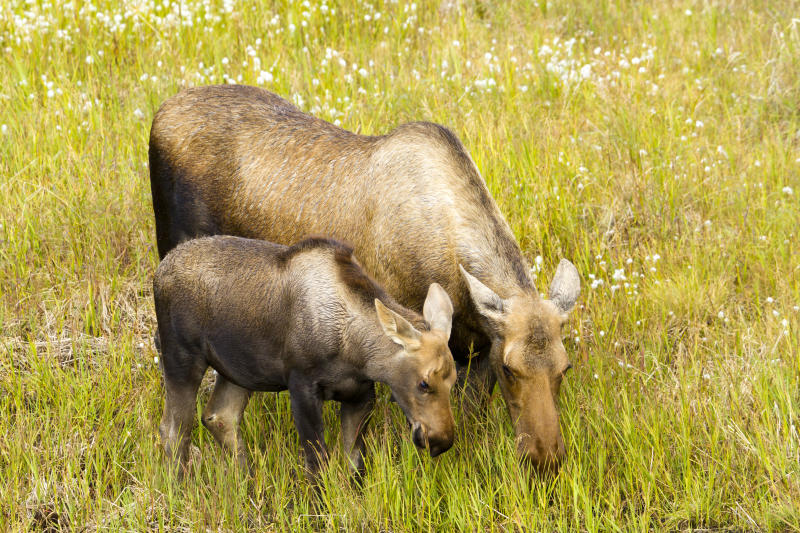
Seeing moose is high on the list for a lot of visitors, and for good reason! Moose are one of the most iconic animals in Alaska, and the biggest land mammal in North America. Large and in charge, you’ll see these animals anywhere you go in Interior Alaska. Follow along to learn more about Alaskan moose!
Meet the moose
- Bio: Moose are tall, strong and a little shy at first. Early mornings are a moose’s favorite, and nothing beats a good nap in the shade. They love long walks, nibbling on fresh leaves, and swimming.
- Relationship status: Single and not looking for anything serious.
- Location: Alaska, Canada and parts of the northern United States.
- Age: Cow (female) moose can live up to 20 years, and bull (male) moose can live to around 15 years old.
- Size: The biggest moose in the world are in Alaska. The average bull moose weighs upwards of 1600 pounds, and cow moose can weigh up to 1300 pounds.
- Antlers: Only bull moose have antlers, and only sometimes. Bulls shed and re-grow their antlers every year. Moose antlers can get big, especially in Alaska. Some weigh up to 30 pounds and with an average size of 55 to 70 inches wide.
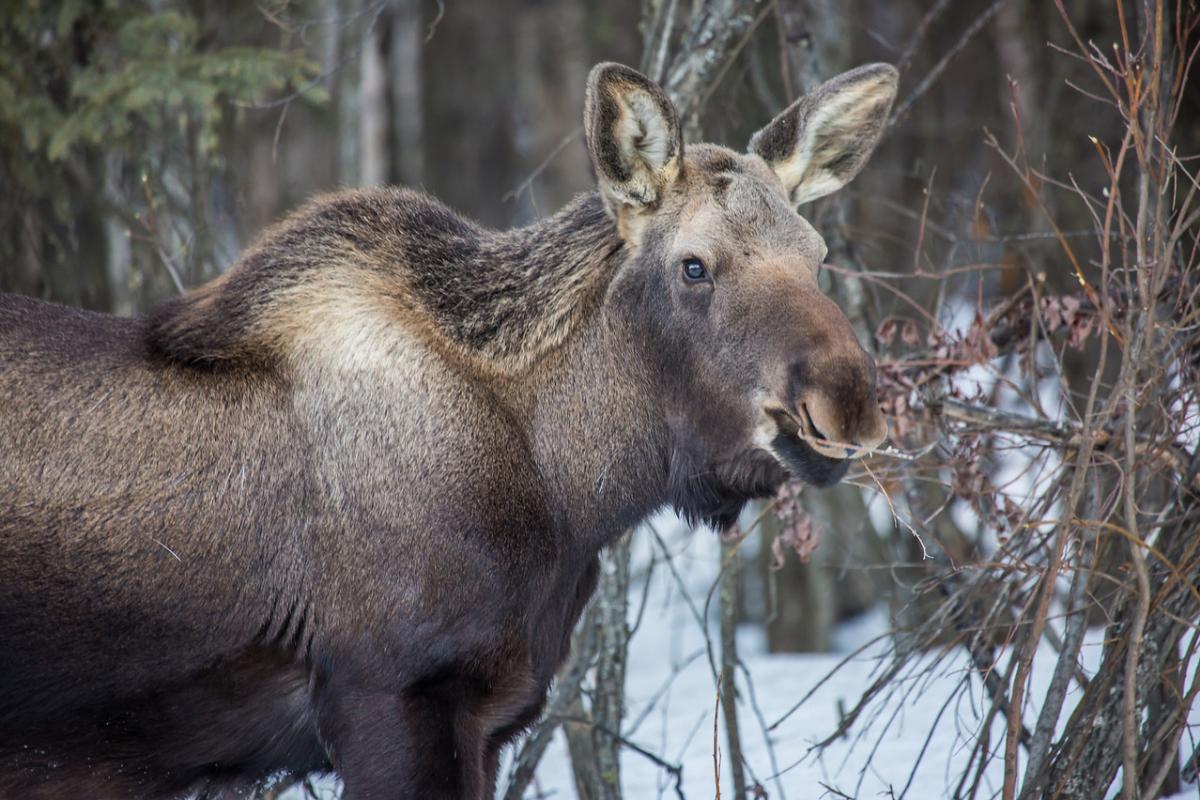
What do moose do all day?
Seeing a moose might feel like a chance encounter, but understanding their behavior can increase your chances of spotting a moose.
- Morning: Moose are most active at dawn, which makes early mornings a great time to spot them. Activity can increase even more during the fall rut (mating season.
- Daytime: Moose spend their day feeding, digesting and resting. Their diet changes seasonally, but you’ll often see them feeding on leaves, aquatic plants and bark. During warmer months, you’ll find them resting in shaded areas during the heat of the day.
- Evening & Night: Moose may continue feeding in the evening and occasionally graze throughout the night.
Through the seasons
- Spring: As winter ends, moose feed more heavily on fresh shoots and grasses.
- Summer: Moose spend a lot of time in water to avoid heat and insects and graze on aquatic plants.
- Fall: This is the mating season, or rut. Bull moose become more active and spar, fight and look for cows. If you see a moose in the fall, they might be more reactive vs. other times of the year.
- Winter: Cold weather and snow mean a more limited diet of twigs and bark. Moose are often less active to conserve energy but continue to browse daily.
Fun Facts
- What is a moose? Moose are the world’s largest member of the deer family!
- Moose are HUGE: They’re the largest land mammal in North America, and Alaskan moose are the biggest of them all. The average bull moose weighs upwards of 1600 pounds, and cow moose can weigh up to 1300 pounds.
- Moose LOVE water: Moose love to munch on aquatic plants that grow around and at the bottom of lakes. They also use water to cool down, or even as a walking path. If you’re close to water, it’s very likely that you’ll see a moose.
- Moose are fast: Moose can run up to 35 mph and swim at 6 mph.
- Moose can kick in any direction: Moose might as well be professional boxers. They can kick in 360 degrees with their front and back legs.
- Some moose hair is hollow: Hollow hair gives moose extra insulation for warmth in the winter. In the summer, hollow hair helps moose float when they swim!

Sources: Rutting Behavior of Moose (U.S. National Park Service), Wildlife Safety Educational Resources, Alaska Department of Fish and Game, 50 Incredible Moose Facts About The World’s Largest Deer Species, Moose: Did You Know? (U.S. National Park Service), 11 Moose Facts That Will Blow Your Mind, Moose: Wildlife Notebook Series – Alaska Department of Fish and Game, Moose: Did You Know? (U.S. National Park Service), How Big is a Moose? (Size, Weight, Height) – Wildlife Informer, Moose — Wildlife Viewing, Alaska Department of Fish and Game, Ask a Biologist, Alaska Department of Fish and Game, Rutting Behavior of Moose (U.S. National Park Service), Moose: Did You Know? (U.S. National Park Service)