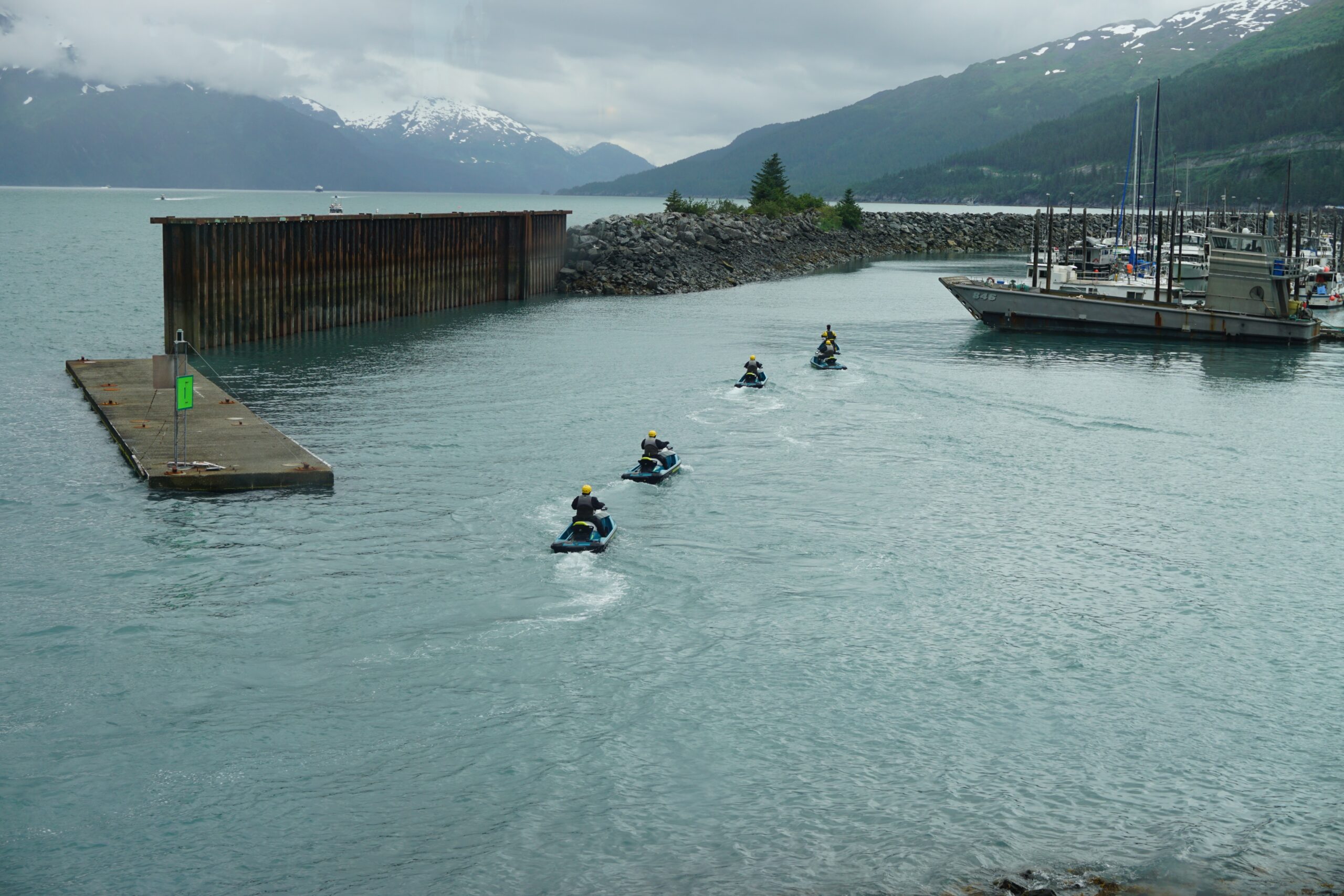
The western Prince William Sound town of Whittier is small, with only about 250 residents packed into a narrow slice of land between the mountains and the sea. But it accommodates a huge number of travelers who move in and out by cruise ship, ferry, railroad, car, bus and truck.

In recent years, according to city officials, Whittier has gotten about 700,000 visitors annually: tourists, recreational users, seafood workers, cargo shippers and others. That number is expected to increase substantially in the coming years.
To help figure out ways to move people in and out more efficiently, with fewer bottlenecks and confusion, the city and the state Department of Transportation and Public Facilities are developing a plan to guide the next 20 years: Whittier Moves.
“All eyes are on Whittier as an area of opportunity to grow tourism and freight,” the plan’s website says. But to realize that potential, improvements are needed to address challenges posed by the narrow geography between the water and the mountains, including limited flat land and a sole ground transportation link to the outside, the Anton Anderson Memorial Tunnel. It is North America’s longest combined rail-auto tunnel, but it is only one lane wide, meaning travelers to and from Whittier, whether in cars or on the train, have to take turns.
A draft master plan released in June is the product of numerous meetings, workshops, open houses and other events. Among the concerns raised by residents and visitors were lack of adequate parking during busy periods, confusing or missing signage and overtaxed public facilities. City and state officials will accept comments on the draft plan will through July 24, and they expect to complete a final plan this year.

Concurrent with the Whittier Moves project is the city’sWhittier Safety Action Plan, which is to “identify existing safety issues, analyze roadway data, and recommend strategies and projects that can improve safety for people walking, biking, driving, and operating commercial vehicles.”
The planning work is timely. Traffic in and out of Whittier is on the rise, thanks largely to a big increase in cruise ship use.
In 2024, Whittier received 46 cruise ship calls ferrying 296,300 passengers, according to the Department of Transportation and Public Facilities. Last year, after a new cruise terminal opened, ship calls jumped to 73, according to the department. This year, there are 103 ship calls expected, more than twice the number just two years ago, according to the department.

Additionally, a big crowd is expected in Whittier in early August, when the U.S. Navy is set tocommission a new warshipnamed after the late U.S. Sen. Ted Stevens, R-Alaska.
Along with its role as a road-marine-railroad hub that attracts tourists, recreationalists, seafood harvesters and cargo shippers, Whittier regularly lands on lists as one of the “weirdest” towns in the nation.
The modern town, where the Alaska Railroad, Alaska Marine Highway System and the state road system converge, is a military legacy.
Nearly all residents live in a single building, the Begich Towers, a converted military building that also houses a store, post office and church.
Beneath Whittier’s shops, restaurants and other structures is a web of tunnels left by the military, most of them closed but some still in regular use, like the underground route between the Begich Towners and the Whittier School.

The biggest building in town, taking up a significant portion of the scarce space between the water and the mountains, has been abandoned for decades: the 273,600-square-foot Buckner Building. Used for only a few years in the 1950s, it was its own city under one roof, “including a shooting range, drycleaner, theater, bank, barber shop, commissary, post exchange, craft shop, snack bar, officer’s club, serviceman’s club, bowling alley, library, bakery, classrooms, radio & TV stations, office space, dental clinic and hospital,” as the Alaska Department of Environmental Conservationdescribes it. The building has long been closed to public use because ofasbestos and other hazards.
A bill passed by the legislature aims to help Whittier to gain a bit more space to accommodate visitors and traffic. The measure, House Bill 216, allows the city to buy land from the state-owned Alaska Railroad, transactions that require legislative approval. The city and railroad have already struck deals for some parcels located in strategic spots. The bill became law and went into effect on July 3 without the governor’s signature.