
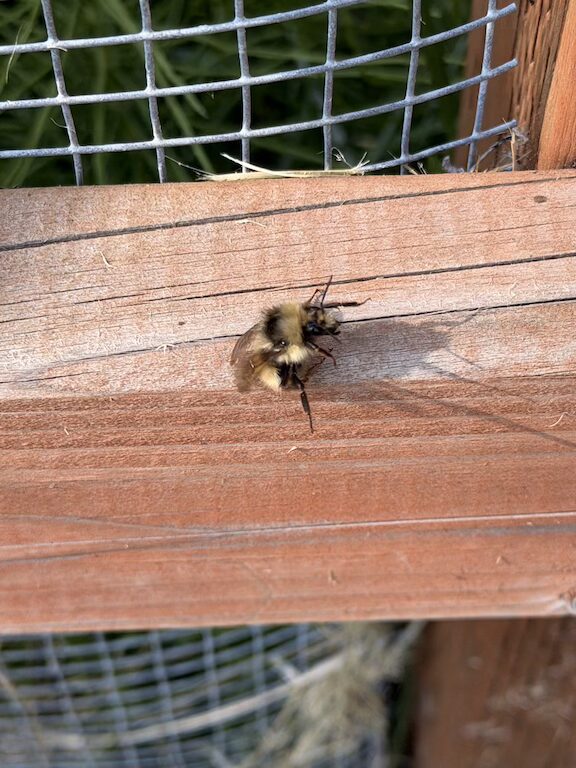
On a warm July afternoon near Fairbanks, a volunteer with the Alaska Bee Atlas kneels beside a patch of blooming fireweed, gently sweeping a net through the air. A small bumblebee lands in the bottom of the net — one of thousands of specimens collected each summer across the state. It’s a simple moment, but one that reflects a much greater effort: Alaskans working together to understand the bees that pollinate the North.
For decades, scientists knew surprisingly little about Alaska’s native bees. The state’s size, remote landscapes and short summers made systematic research difficult. Many species were known from only a handful of specimens. Others had never been documented at all. As Alaska warms faster than almost anywhere else on Earth, these knowledge gaps have become more urgent.
Today, a growing network of researchers, land managers and community scientists is beginning to fill those gaps — and the Alaska Bee Atlas is at the center of that effort.
A statewide effort to understand Alaska’s bees
The Alaska Bee Atlas is the first coordinated, statewide project designed to document where Alaska’s bees live, how abundant they are, and how their ranges may be shifting. Volunteers and researchers collect bees from tundra, forests, meadows, and backyards, creating specimen‑based records that scientists can verify and study for decades to come.
These specimens help answer fundamental questions:
- Which bee species live in Alaska?
- Where are they found?
- How are their ranges changing as the climate warms?
- Which habitats support the greatest diversity?
Because Alaska is vast and sparsely populated, scientists cannot survey every region on their own. The Bee Atlas expands their reach, bringing in observations from communities across the state. Each specimen becomes a data point that helps build a clearer picture of Alaska’s pollinators.
Why this science matters
Alaska’s bees are adapted to cold temperatures, short summers, and unpredictable weather. Many can fly in conditions that would ground bees elsewhere. But these same adaptations make them sensitive to rapid environmental change.
Researchers are beginning to document:
- earlier spring flowering,
- shifts in bloom timing across regions,
- changes in bee emergence patterns, and
- the spread of invasive plants into new areas.
These changes can affect the delicate timing between bees and the flowers they depend on — a relationship scientists call phenology. When flowers bloom too early or too late, bees may struggle to find food at critical moments in their life cycle.
Understanding these shifts requires long‑term data, and that is exactly what the Bee Atlas is designed to provide.
Supporting research across Alaska
While the Bee Atlas is the backbone of statewide monitoring, other agencies and institutions contribute essential pieces of the puzzle.
Researchers at the University of Alaska and the Alaska Center for Conservation Science study how bees respond to temperature, snowpack, and changing vegetation. The U.S. Fish and Wildlife Service and National Park Service maintain long‑term monitoring plots that track pollinators alongside plants, wildlife, and climate conditions. Together, these efforts help scientists understand how Alaska’s ecosystems are changing — and what those changes mean for pollinators.
What scientists still son’t know
Despite recent progress, major questions remain:
- How do Alaska’s bees survive long, cold winters?
- Which species are expanding their ranges northward?
- How quickly are invasive plants altering forage availability?
- Are diseases or parasites affecting native bees in Alaska?
Answering these questions will require years of data — and the continued involvement of volunteers across the state.
A foundation for the future
The science emerging from the Bee Atlas and related research programs is more than an academic exercise. It provides the foundation for conservation decisions, land‑management strategies and community efforts to support pollinators.
By understanding where bees live, how they are changing and what they need to thrive, Alaskans can make informed choices — from backyard gardens to public lands.
On that July afternoon near Fairbanks, the volunteer gently transfered the bumblebee from the net into a small vial. It’s one specimen among many, but together, these small contributions are helping build the most comprehensive picture of Alaska’s pollinators ever assembled. In a rapidly changing North, this knowledge may be one of our most important tools.
This is the fourth article in a six commentary series about Alaska’s native bees.