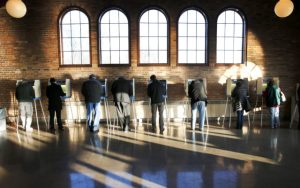
The state of Alaska has removed an estimated 3,000 to 3,500 Alaskans from the state’s active voter list, claiming they may be noncitizens.
The removals leave those residents able to vote only if they provide extra identity information, and removal puts them on track to be purged from the state’s voter roll altogether.
Only U.S. citizens may vote in Alaska, according to state and federal law, but many of the removals appear to have affected citizens who were erroneously flagged by the Alaska Division of Motor Vehicles.
Carol Beecher, director of the Alaska Division of Elections, told state lawmakers on Wednesday that the removals were the result of “old data” given to the division from the DMV, and she isn’t sure why so many Alaskans were flagged as possible noncitizens.
Under Alaska’s “motor voter” program, people are asked if they want to register to vote when they apply for a driver’s license. The registration process requires the applicant to state whether or not they are a citizen.
Elections officials check the state’s voter roll against DMV records several times per year, searching for people who may be incorrectly registered to vote here. That usually results in “more like 200 names” being flagged for extra attention, Beecher said.
The latest check found “a lot more names than we were expecting,” Beecher said.
“We believe that when we did the match, that a lot of old data was picked up somehow. So we’re still ferreting through that,” she said.
Beecher said that although the number of names flagged by the DMV was “very concerning,” the state has an obligation to act on the agency’s report.
“It is not disenfranchising the individual from being able to vote, but it’s a measure the division has to take to make sure that we only have citizens voting,” she said.
Under its normal procedure, the division sends letters to people who were flagged by the DMV, asking those people if they are citizens.
Thousands of those letters were mailed to affected state residents starting last month, according to Beecher’s testimony and copies provided to the Beacon by affected citizens.
Beecher told lawmakers that anyone deemed a noncitizen by the state simply needs to contact the Division of Elections by phone, email or mail and state that they are a citizen.
“It is not an onerous request from the division to simply contact us and confirm, and that is what we have asked them to do. We don’t require paperwork. We’re not requiring documentation. Nothing like that,” she said.
After Beecher’s statements, the Beacon asked the head of the Alaska Division of Motor Vehicles, Kathy Wallace, and the Commissioner of the Alaska Department of Administration, Paula Vrana, for an interview. The Department of Administration is the DMV’s parent agency.
In response, the division sent a memo saying that in March, “the DOE provided DMV with a list of approximately 15,200 DMV license and identification applicants and requested that DMV provide citizenship information for these records. This was a non-routine request.”
What it gave to the Division of Elections was “only those records where DMV’s latest confirmed status for an individual was other than ‘Citizen.’”
Based on interviews with affected people, the records flagged by the DMV appear to include Alaskans who obtained driver’s licenses as noncitizens, then became citizens and registered to vote, but have not received a new driver’s license since becoming a citizen.
Chris Waigl of Fairbanks got her Alaska driver’s license in 2019 and became an American citizen in 2025. She became alarmed after checking her registration status last weekend, only to learn that she was listed as “inactive – non citizen.”
“They were able to correct it there and then after I sent in copies of my naturalization certificate with a date before my voter registration date,” she said by email.
But Waigl went further, contacting four other people who became naturalized citizens at the same time she did. Of those, only one said they were still listed as an active voter.
One of the others, reached by phone, said he was listed as inactive despite registering as a voter at the local DMV office and presenting his citizenship paperwork at that time.
Another naturalized citizen, living in Juneau and unaffiliated with Waigl, said they also were unregistered despite indicating on their Permanent Fund dividend application that they are a citizen.
Several people affected by the removal said they have attempted to contact the Division of Elections but have been unable to reach staff by phone, and that voicemail boxes have been full.
“It’s just ridiculous,” Waigl said.
She said the state’s policy of simply sending a letter is inadequate, particularly because there may be legal consequences if the state or federal government believes someone has voted as a noncitizen.
“Citizenship rights, immigration is something I’m interested in for obvious reasons,” she said.
This isn’t the first time voter registration issues have been attributed to the DMV.
In 2022, mistakes by the division led to dozens of noncitizens being registered to vote, even if they specifically stated they were nonresidents and ineligible. Some went on to cast ballots in state and local elections.
The scale of the new removals is notable. Last year, a copy of the state’s inactive voter list showed 541 registrations listed as belonging to possible noncitizens.
If 3,500 people were added to the inactive list by the Division of Elections, that would represent more than a 700% increase.
The removals caused the state’s active voter roll to shrink between June and July, the first time since at least 2020 that has occurred in an election year, state statistics show.
The removals come seven months after Lt. Gov. Nancy Dahlstrom, who oversees the Division of Elections, directed the state to answer a request from the U.S. Department of Justice and turn over extended copies of the state’s voter rolls.
The Justice Department has made similar requests across the country and intends to share the data with the U.S. Department of Homeland Security to check for noncitizens who may have voted illegally.
The tool used by DHS is error-prone and has erroneously flagged some citizens, according to an investigation by ProPublica.
States led by Democratic officials have accused the federal government of deliberately attempting to raise fear, uncertainty and doubt about state elections systems in order to lay the groundwork for challenges to the 2026 midterm elections.
“I’m just truly deeply concerned about this process creating even more distrust in our voter rolls, as if there isn’t enough already because of allegations,” Rep. Ky Holland, I-Anchorage, told Beecher on Wednesday.
A memo signed by Beecher and U.S. Assistant Attorney General Harmeet Dhillon in December calls for the state to remove voters from the active list if they are specifically identified by the federal government.
Civil rights groups sued the state in April over the voter list issue. In June, the state filed a motion to dismiss; that motion is awaiting adjudication.
State legislators asked Beecher on Wednesday if the latest removals were at the behest of the federal government.
No, said Beecher.
“It has nothing to do with that,” she said. “The information that we have received is specifically from DMV. Why the voter list or why the list was so large this time, we’re not completely sure… we are looking into figuring that out.”
But, she added, if the federal government were to request a removal, the state would follow the exact same procedure as it used recently.
“If we were to get information from them, we would take the same steps of moving them into inactive while we investigated,” she said.