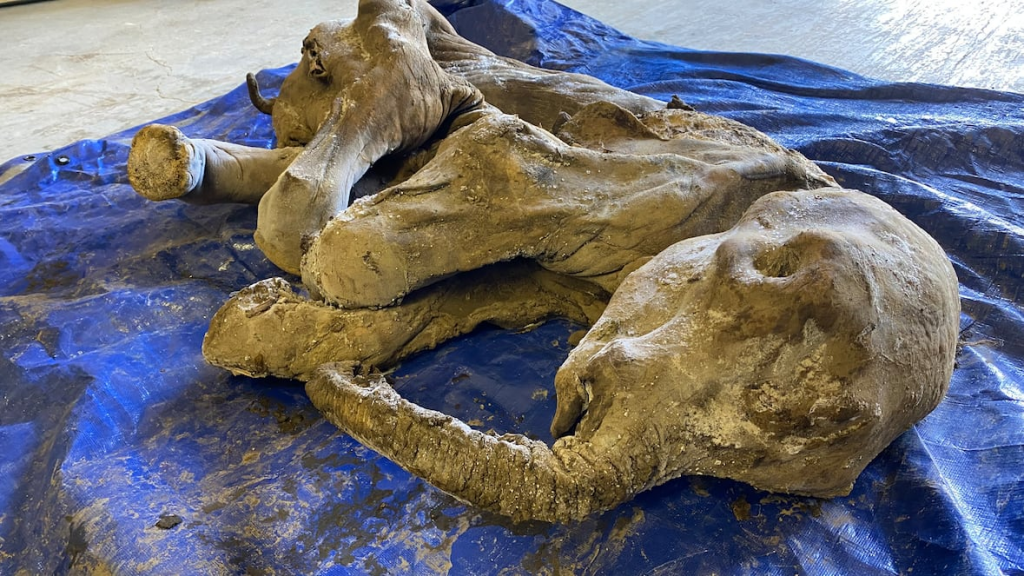
Rare specimen found in 2022 currently being preserved at Canadian Conservation Institute in Ottawa
It’s been four years since a placer miner near Dawson City, Yukon, dug up an almost perfectly-preserved baby wooly mammoth, later named Nun cho ga by the Tr’ondëk Hwëch’in First Nation.
And the First Nation hopes the rare specimen will soon return to Dawson for long-term keeping.
Nun cho ga translates to “big baby animal” in the First Nation’s traditional Hän language.
The animal — believed to be about 36,000 years old — has been at the Canadian Conservation Institute in Ottawa since 2024 where it is being carefully preserved before it’s sent back North.
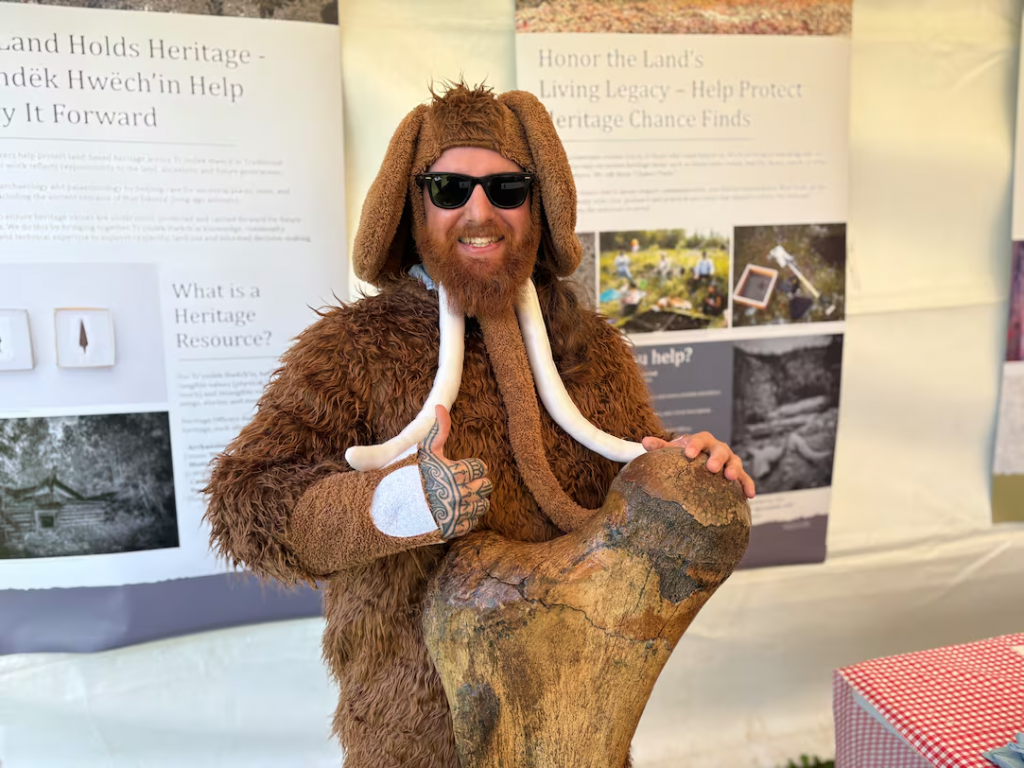
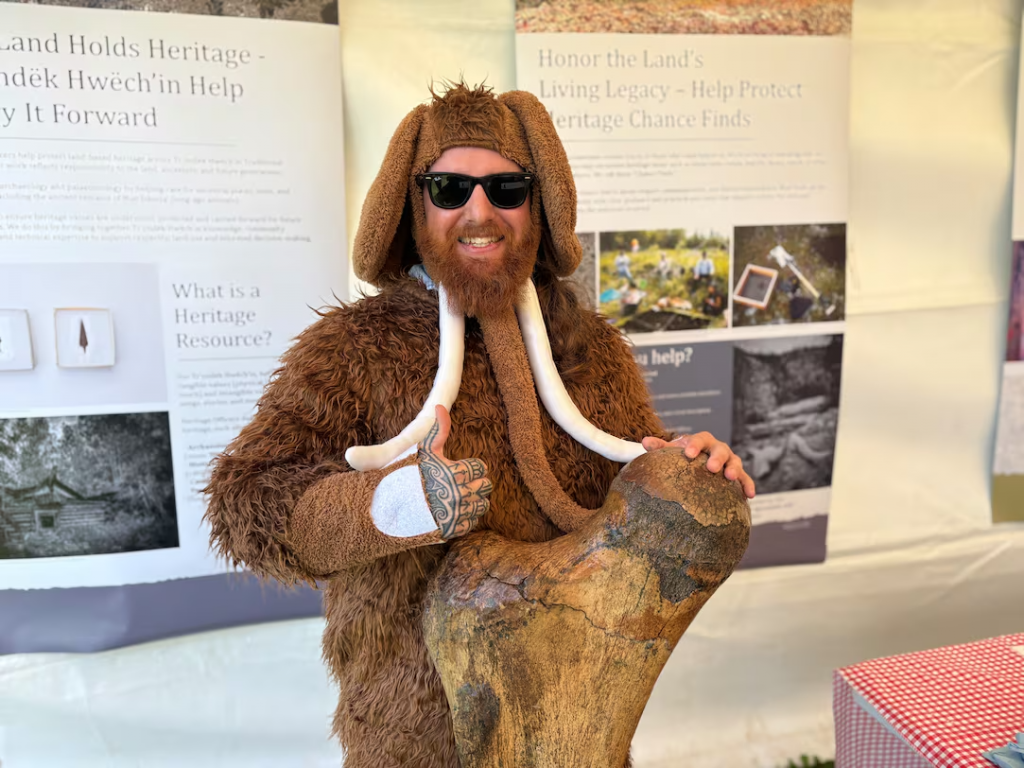
Ty Styner, a heritage officer with the Trʼondëk Hwëchʼin First Nation, said there is currently no timeline for when Nun cho ga will return to Dawson but monthly discussions are underway with a local stewardship committee to determine what will happen with it when it arrives.
“The community voice at this time is to bring this mammoth home,” Styner said. “What exactly that’s going to look like is still to be determined, so as that’s playing out we continue to have these conversations about what does it mean to bring her home? What will that journey look like and what will it look like for the future?”
Some of the discussions involve whether or not the preserved animal will be put on public display, or stored safely somewhere away from view.
Styner said the First Nation is getting updates from the Canadian Conservation Institute about its progress with Nun cho ga. He said it’s a slow process because of how unique the specimen is.
“They’re incredible at what they do, but they’re also honest in saying, ‘we’ve never actually done this before,’” Styner said. “Not with a wooly mammoth, at least.”
CBC News contacted the Canadian Conservation Institute but did not receive a response before publication.
Grant Zazula, a paleontologist with the Yukon government, says the 2022 discovery of Nun cho ga continues to create excitement throughout the country, and the scientific world.
“In so many ways, Nun cho ga is changing lives,” Zazula said. “To have this frozen baby mammoth that’s 36,000 years old — there’s no other community in Canada or North America that has that gift.”
Zazula said he’s been doing paleontology in the Dawson-Klondike region for over two decades and the discovery of Nun cho ga has created a “wholesale change” in how he and fellow colleagues approach the work being done on the First Nation’s traditional territory.
“In the past, it was largely driven by kind of Western scientific principles of learning — you know, studying this and analyzing that,” he explained. “And now since Nun cho ga, we’ve seen how much this animal has impacted the community here [and] impacted everybody who has been around Nun cho ga,” Zazula said.
He said he’s just as excited now as when he first laid eyes on the mammoth, calling it a “huge event for a lot of people.” He said he doesn’t expect the feeling to wear off anytime soon, either.
“I know that there’s a lot of people paying attention to this,” Zazula said.
“There’s a lot of people in my scientific world that are paying attention to Nun cho ga, and Trʼondëk Hwëchʼin, because this is the first time we’ve ever seen an ancient animal cared for in this way by a First Nation community.”
Related stories from around the North:
Canada: Scientists trace woolly mammoth’s 1,000 km journey using its tusk, CBC News
Norway: Arctic underwater forests set to expand with rapid warming, Eye on the Arctic
Russia: New map shows what Bering land bridge looked like 18,000 years ago, CBC News
United States: Paleontologists discover Arctic’s first-ever lambeosaur fossil in Alaska, CBC News