More than 600 U.S. citizens were mistakenly flagged as possible noncitizens and removed from Alaska’s list of active voters earlier this year, the director of the Alaska Division of Elections said Thursday in a letter responding to questions from state lawmakers.
Those citizens were among 3,058 people removed from the list after the division compared its citizenship data to a separate set of records kept by the Alaska Division of Motor Vehicles.
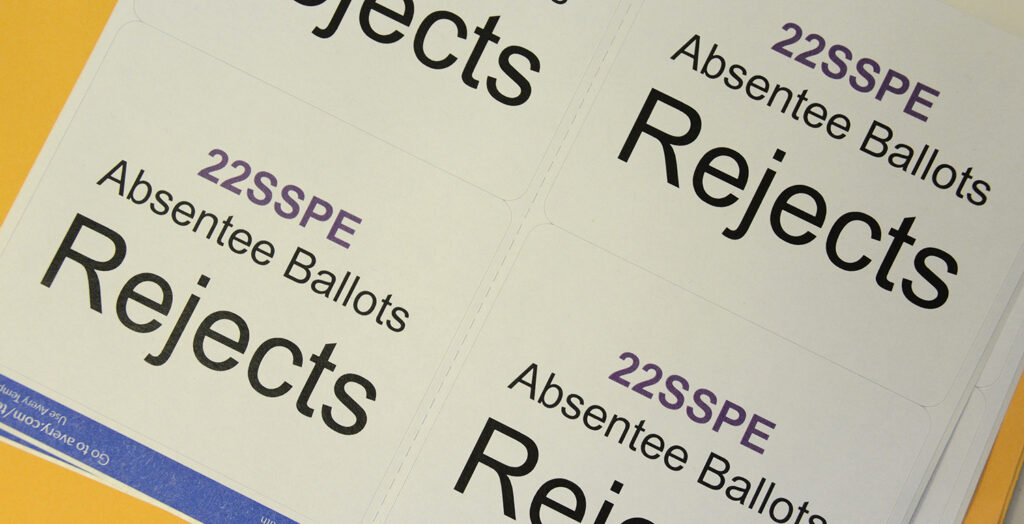
Someone removed from the voter list may still cast a vote this year, but they will not appear on the register of their local precinct and will have to provide additional identity information in order to cast a “questioned ballot.”
Removal from the active voter list also puts a citizen on the path to being purged altogether from the voter list, an act that would make them ineligible to vote.
After the swath of removals, the Division of Elections sent letters to every affected state resident, and many have responded.
“Approximately 685 voters have contacted the Division and stated they are citizens, despite the inconsistency with the DMV’s records,” Carol Beecher, the division’s director, said in a letter addressed to the chairs of the Alaska House Judiciary Committee and the Alaska State Affairs Committee.
Beecher also said “more than 100 people have reported they are not citizens and requested that their voter registration be cancelled.”
About 350 letters were returned as undeliverable, and another 1,900 affected Alaskans have not responded at all, indicating that they may be unaware that they were removed from the active voter list before the Aug. 18 statewide primary election.
Legislator calls timing of removals ‘very interesting’
In an interview with the Anchorage Daily News earlier this week, and again in Thursday’s letter, Beecher said she will not unilaterally return affected Alaskans to the voter rolls.
The division will instead send out another notice to affected voters, she said.
Beecher’s letter leaves many questions unanswered and raises more. According to the letter, the Division of Elections checked “the entire statewide voter registration list … with DMV records.”
Normally, the two divisions only compare a fraction of the list, and typically only those people who are registered to vote through the federally mandated “motor-voter” program that prompts citizens to register to vote when they get a new driver’s license.
In 2024, for example, DMV and DOE compared just 2,000 records — not the more than 580,000 compared this year, which DMV called “non-routine.”
Legislators asked Beecher the reason for the switch, which took place with no notice, in an election year. Beecher’s letter does not answer.
“It’s kind of interesting that the DOE is essentially spearheading a large-scale voter roll cleanup and list maintenance immediately preceding a primary election with major implications for the state going forward,” said Rep. Ashley Carrick, D-Fairbanks and one of the two legislators to which the letter was addressed.
Rep. Andrew Gray, D-Anchorage and the other recipient, said by text message that he was driving Thursday afternoon and had not yet reviewed the letter.
Carrick, speaking broadly, noted that the Alaska Legislature passed a bipartisan elections bill — Senate Bill 64 — that would have improved voter roll list maintenance, but Gov. Mike Dunleavy vetoed it.
“A lot of this would have been taken care of with policy that we passed as a legislature in a more routine format, so I think it’s very interesting that those two things are corresponding,” Carrick said.
The Alaska Legislature attempted but failed to override Dunleavy’s veto, with two Republican lawmakers, both from Southeast Alaska, providing the key votes to uphold the governor’s decision.
Poll worker fired for raising concerns
In Anchorage, Lisa Maloney was briefly hired as a temporary poll worker to chair the precinct covering Jewel Lake. On Thursday morning, Beecher fired her after an email exchange in which Maloney raised concerns about the way that poll workers were instructed to handle potential issues with voters flagged by the division as possible noncitizens.
Maloney said it might be misleading for poll workers to tell potential voters to cast a questioned ballot if the poll worker knows the ballot will not be counted.
“You have been provided with instructions on what to do when an individual who is not on the register wants to vote. We are not confident that you will follow these instructions and for that reason we will no longer require your services as a Poll Worker for the August 18 Primary Election or the November 3, General Election,” Beecher wrote.
In a prior email to Beecher, Maloney had said she does not think it is practical for someone removed from the active list to promptly call the Division of Elections on Election Day if they have questions.
By phone, Maloney said she thinks Beecher “seems to have completely lost track of the fact that it’s actually her job to make sure that everybody who should get to vote can. At least, that’s my understanding of the job of the Division of Elections, and that is why I had signed on to be a poll worker.”
Beecher has not responded to an independent list of questions sent to the division by the Alaska Beacon, which requested an interview on July 28 and was denied.
The division asked for a list of questions, which was sent by email on July 31. The Beacon followed up by email on Tuesday and again Thursday morning. The division has not responded as of Thursday afternoon.
State legislators requested a list of all 3,058 people removed by the division. The division has not released that list.
The Beacon has an outstanding public records request — due by the end of the day Friday — for a list of all people on the state’s inactive voter list who are flagged as “noncitizens.”
The division disclosed a similar list last year, which showed 70 noncitizens either voted or attempted to vote in elections over the past decade.
Beecher’s letter to legislators also does not explain why the Division of Elections relied on DMV data rather than data from the Alaska Permanent Fund Dividend division, which collects data on citizenship annually.
Driver’s licenses may be valid for a decade, which means many people were affected by this year’s action because they obtained driver’s licenses before subsequently becoming citizens and registering to vote.
Given the outcome, Beecher said, “the Division has paused additional DMV comparisons while it evaluates this initial effort and incorporates lessons learned. Future comparisons should involve fewer records because this was the first review that involved the entire voter list.”