Leading members of the Alaska House and Senate said this week that they will not meet to discuss Gov. Mike Dunleavy’s latest attempt to provide a tax break for the proposed trans-Alaska natural gas pipeline.
The bill, said Speaker of the House Bryce Edgmon and Senate President Gary Stevens, lacks the support to advance in either body.
“The caucus is really not at this point, really not interested in having to rush a bill,” Stevens said.
“The votes just aren’t there,” Edgmon said. “The Senate made it very clear that they need more time than what could be allotted.”
Glenfarne, the firm acting as the project’s lead developer, has said that a tax break is necessary to finance the pipeline. Glenfarne had said that it was planning to reach a final investment decision on the first phase of the project by the end of this year.
It has already missed several self-imposed deadlines, and it isn’t clear whether it will again change its plans. The company did not respond to a request for comment on Thursday.
As proposed, the pipeline project would be built in two phases, with the first completed no sooner than 2029. The first phase would deliver gas from the North Slope to Southcentral Alaska for in-state use. The second phase would allow international exports.
Official estimates state that the total project will cost as much as $54.5 billion, making it one of the largest natural gas projects in the world. Unofficial estimates are significantly higher.
The governor released his proposal 17 days into a 30-day special session about pipeline taxes. This is the third special session of 2026 devoted to the issue; the second special session ended in July after the state House voted down a compromise bill.
The governor’s new bill appears similar to that failed compromise. It would replace the state’s petroleum property tax with a tax on gas shipped through the pipeline, a change that would help the project pencil out financially, and it would cap the cost of gas for in-state use and shield the state from cost overruns.
It also includes a 2% corporate income tax on certain privately owned oil and gas companies that don’t pay the state’s existing corporate income tax. That’s a little over a fifth of the size of a similar tax proposed by the Senate.
The so-called “pass-through entities” tax was a key condition of skeptical state Senators and helped last month’s compromise bill pass the Senate.
But business-friendly trade groups and legislators opposed the tax increase, causing it to fail in the House, and Dunleavy said before the House vote that he would veto the Senate’s version if it reached his desk.
Dunleavy’s proposed tax rate is lower than the one approved by the Senate, but it nonetheless represented a major concession. The governor had said in June that the tax was “a line in the sand.”
On Wednesday, he had a different perspective.
“This bill is a compromise that removes a significant barrier to moving the gas line forward,” he said in a written statement.
But the compromise appears to have satisfied no one.
A coalition of trade groups and the Alaska Chamber of Commerce issued a letter opposing it, and Stevens said by phone on Thursday that lawmakers will need to review the governor’s changes.
In a Tuesday news conference with reporters, Stevens said 2% is “not very much. … We need to do a careful analysis of that. I think the intention of the Senate was a higher tax than that.”
The 35th Alaska State Legislature is scheduled to convene in January, after this fall’s election. Incumbent Gov. Mike Dunleavy is term-limited and will leave office in January. The Legislature will have new leaders, too. Stevens is retiring and Edgmon is running for Senate.
“I think we’ve reached the point, honestly, where we need to turn it over to the new governor, whoever that would be, and a new legislature,” Stevens said.
Glenfarne, the development firm that owns 75% of the pipeline project, did not respond to a request for comment on Thursday about the governor’s latest proposal and did not answer a question asking what it thinks about the potential for there to be no bill this year.
Earlier this year, Glenfarne officials said the tax break is necessary for the project to obtain financing.
Some state legislators say Glenfarne supported a prior compromise bill but subsequently withdrew its support under pressure from the oil and gas company Hilcorp.
Hilcorp killed Alaska LNG bill, some legislators say, but governor calls the claim ‘bulls**t’
In response to a request for comment about the latest bill, Hilcorp spokesman Matt Shuckerow said the company doesn’t support the governor’s proposal.
“The underlying issues with this structurally incomplete and insufficiently developed income tax language remain unchanged and unresolved,” he said by email. “Hilcorp supports the Alaska LNG Project, but legislation intended to improve the project’s commercial viability should not impose a new tax that increases the cost of producing its gas, further complicates long-term investment and commercial negotiations, and challenges Cook Inlet development at a time when continued investment is critical to maintaining reliable natural gas supplies.”
Hilcorp offered a longer statement about its position on July 23, shortly after the failure of the prior compromise proposal.
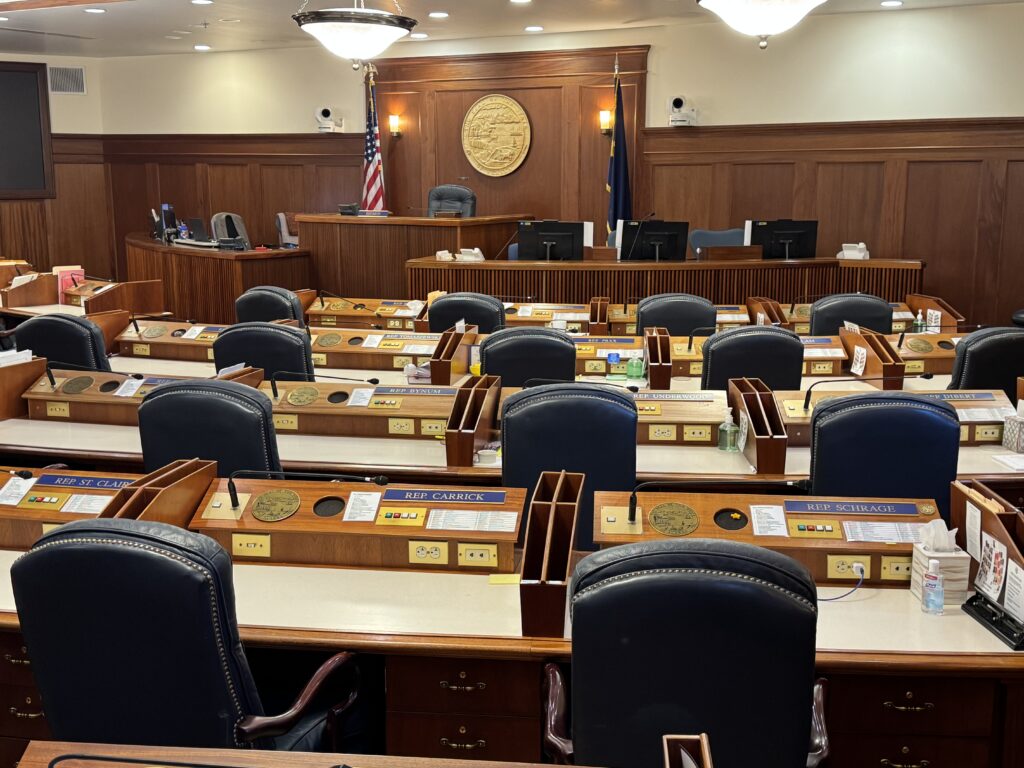
Late Wednesday, the leaders of the 21-person coalition in charge of the state House issued a statement declaring that “intractable differences have emerged on the Governor’s bill relating to property tax relief for the gas line. The proposed HB 4001 does not appear to have the support needed to pass the Alaska House, with opposition being expressed by both Majority and Minority members.”
The 19-person, all-Republican House minority caucus responded with a letter asking the Majority to call the House back to Juneau anyway in order to continue talking about the gas pipeline.
House Minority Leader DeLena Johnson, R-Palmer, said the letter doesn’t mean that all members of the minority support the governor’s bill, just that they want to continue talking about the issue and trying to find a path forward.
But Edgmon said that doesn’t make sense.
“It costs a lot of money to reconvene the Legislature,” he said. “It doesn’t make fiscal sense to just go down and talk about something with no resolution at hand, or no means to achieving a resolution, and so here we are.”