
Premier John Main says he’s ‘behind our federal negotiators and behind the prime minister, 100 per cent’
Days after trade talks between Canada and the U.S. fell apart, leaders from across the North are voicing support for the federal government amid an escalating trade war — including Nunavut Premier John Main.
Over the weekend, negotiations between the two countries collapsed at the 11th hour when Prime Minister Mark Carney decided to walk away. As a result, the United States introduced 50 per cent tariffs on $28 billion worth of Canadian goods.
Late Tuesday morning, the federal government announced “dollar-for-dollar” counter-tariffs, and $7.5 billion in support for workers and businesses in Canada.
Main said he was concerned about the impact the tariffs could have on residents in a territory where the cost of living was already high.
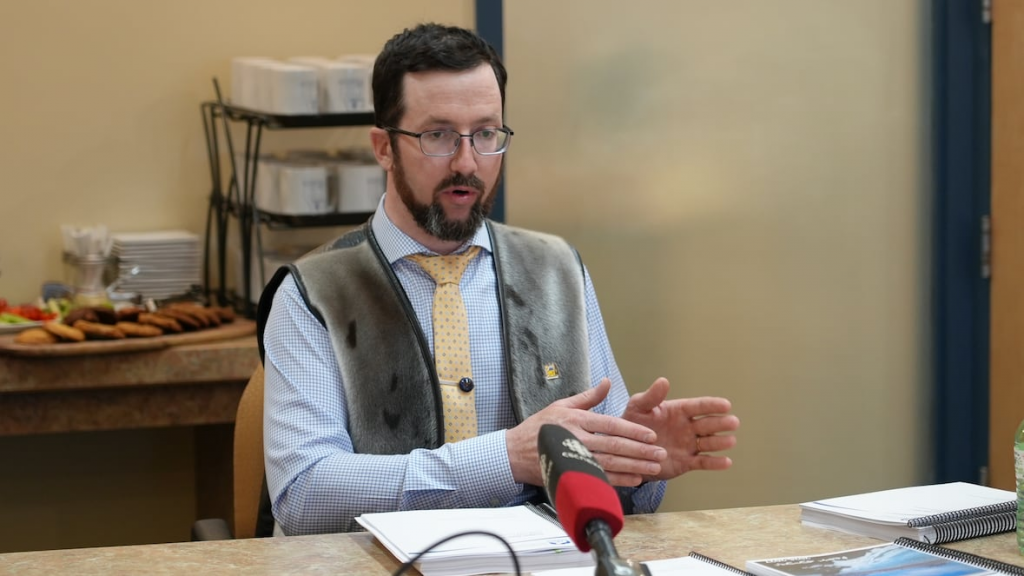
He spoke to CBC’s Qulliq host Lissie Anaviapik on Tuesday morning.
This interview has been edited for length and clarity.
Do you support the federal government walking away from the negotiating table?
As premier, I’m behind our federal negotiators and behind the prime minister, 100 per cent. From the briefings we’ve been receiving … the negotiations were going OK and it looked like we were headed towards a deal last week, as you know, and then kind of last minute things fell apart.
Based on what we’ve heard, the proposed deal from the U.S. was unacceptable. In terms of the decision to walk away, we’re in a really tough position as a country.
What was wrong with the proposed deal from a Nunavut perspective?
I think the foundation, or the starting point around this conversation is free trade between Canada and the U.S. Free trade is a good thing. For many, many years we’ve benefitted from free trade with the U.S. To have an administration in the U.S. that doesn’t believe in free trade and doesn’t appreciate the fact that we can benefit together — that it’s not a competition to steal jobs from one country to the other.
In terms of Nunavut, our biggest concern is cost of living, and we’re still following very closely everything that’s happening, still looking to understand more in detail the impact to Nunavut.
What have you told the federal government about what needs to be done to protect Nunavut from the harshest impacts of this trade war?
The biggest impacts [from new U.S. tariffs] are going to be in British Columbia, Ontario and Quebec. It’s just based on the things that they manufacture and what the tariffs are going to hit. They’re not across the board, they’re targeted to certain commodities and things that are manufactured.
Looking at Nunavut, we don’t have manufacturing on a large scale so we’re not looking to face any impacts in terms of those U.S. tariffs. Where the counter-tariffs come in from the Canadian side, those will be applied to things that are imported into Canada from the U.S., and that’s where the impact is likely going to be felt in Nunavut.
Anything that’s going to further increase the cost of living is a huge concern for us. We’re waiting to see the impact and looking for ways to respond and support those who are impacted.
With files from Lissie Anaviapik
Related stories from around the North:
Canada: Canada commits $11.3 billion to six new Coast Guard icebreakers, Eye on the Arctic
Norway: Resource extraction projects, dwindling sea ice power Arctic shipping surge, Eye on the Arctic
Russia: Container ships shuttling Arctic route between China and Russia carry car components, says Chinese shipper, The Independent Barents Observer
United States: U.S. regulator eyes Arctic shipping chokehold as key deadline approaches, Eye on the Arctic