Alaska has for years designated the second Monday of October as a holiday to honor the nation’s Indigenous cultures and acknowledge the harms of colonialism instead of observing Columbus Day.

In Alaska, Indigenous Peoples Day has been anofficial holidaysince 2015. Gov. Bill Walker’s yearly proclamations were followed by a2017 billpassed by the Alaska Legislature thatthat made the state holiday permanent. In 2023, theAnchorage Assemblymade the day a paid holiday for municipal workers. Alaska isone of 17 states, along with the District of Columbia, that celebrate Indigenous Peoples Day, according to the Pew Research Center.

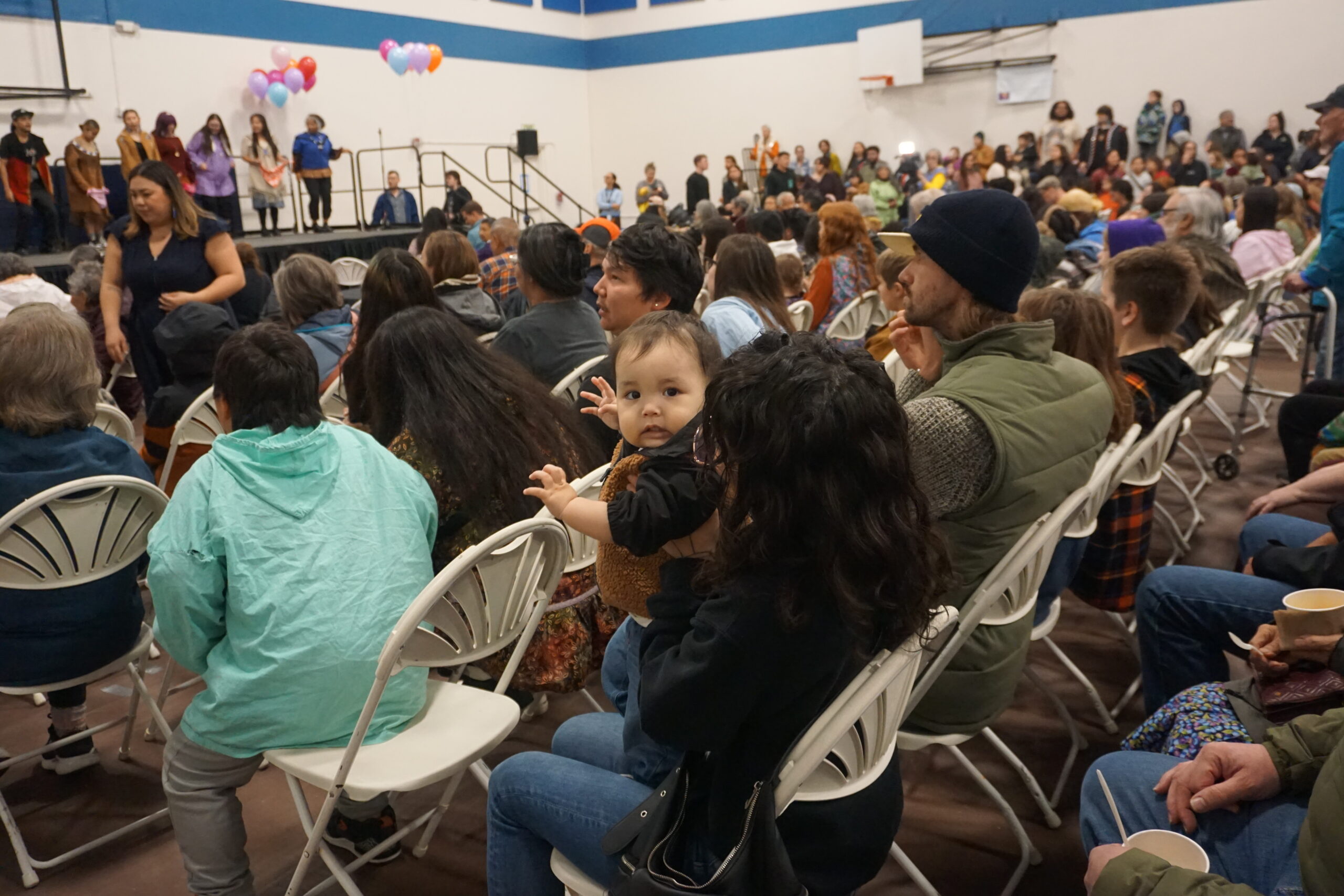
Alaska Pacific University in Anchorage hosted a midday celebration that featured dances, traditional foods like moose stew, a Native sports demonstration, arts and crafts vendors and information booths. It was one of severaleventsin the city and around the state.
The private Anchorage university, which has a goal of becoming a tribal college, hosts Indigenous Peoples Day events annually.
APU President Janelle Vanasse, in remarks to the audience at the start of the celebration, spoke of the college’s programs, including a scholarship that is available for Native students.

Vanasse spent two decades in education in Alaska’s Yukon-Kuskokwim region, followed by service as principal of Mt. Edgecumbe High School, a public state-run boarding school in Sitka that was once an Alaska Native boarding school, before coming to APU.
In comments after her welcoming address to the attendees, Vanasse said her experience in the Yukon-Kuskokwim region helps inform her understanding of community needs there a year after the disaster wrought by ex-Typhoon Halong. The flooding and other damage from the storm prompted the evacuation of more than 1,500 village residents who are now contemplating their futures.
Vanasse said it is important for the residents that the storm-hit communities survive, even if they do so in different configurations.

“I just think there’s so much strength in those communities,” she said.
It is important for Alaska as well, she said. “Our state is ultimately enriched when we have those communities that are keeping so many of their traditions alive,” she said.
Fittingly for a college venue, the performers used their time on state to educate the audience.
One of the performing groups, the Yurapik Drummers and Dancers, encouraged audience members to follow along to learn how to do a traditional Yup’ik morning dance.

“In this song we’re going to be greeting the day. So you’re going to claim yourself to be a part of this world,” Valerie Tony, a leader of the dance group, told the audience.
It is a ritual done even while traveling, she said. “This is where — pay attention — this is where you get your directive from your ancestors,” she said.
And she had another piece of instruction: Audience members trying to follow along should give each other plenty of space, “because we don’t want you to be accidentally on purpose whacking your neighbor.”