If Alaska lawmakers do not vote by 11:59 p.m. Friday on a bill offering a tax break to the proposed trans-Alaska natural gas pipeline project, Gov. Mike Dunleavy says he will call them into another 30-day special session.
In a message on social media, Dunleavy said legislators are making progress on the issue, but if they cannot finish work by the end of an ongoing special session, “I will issue a call for a second special session to give them more time to quickly complete the work.”
For several days, the Senate majority has been deadlocked on a variety of issues, keeping the bill from advancing to the full Senate.
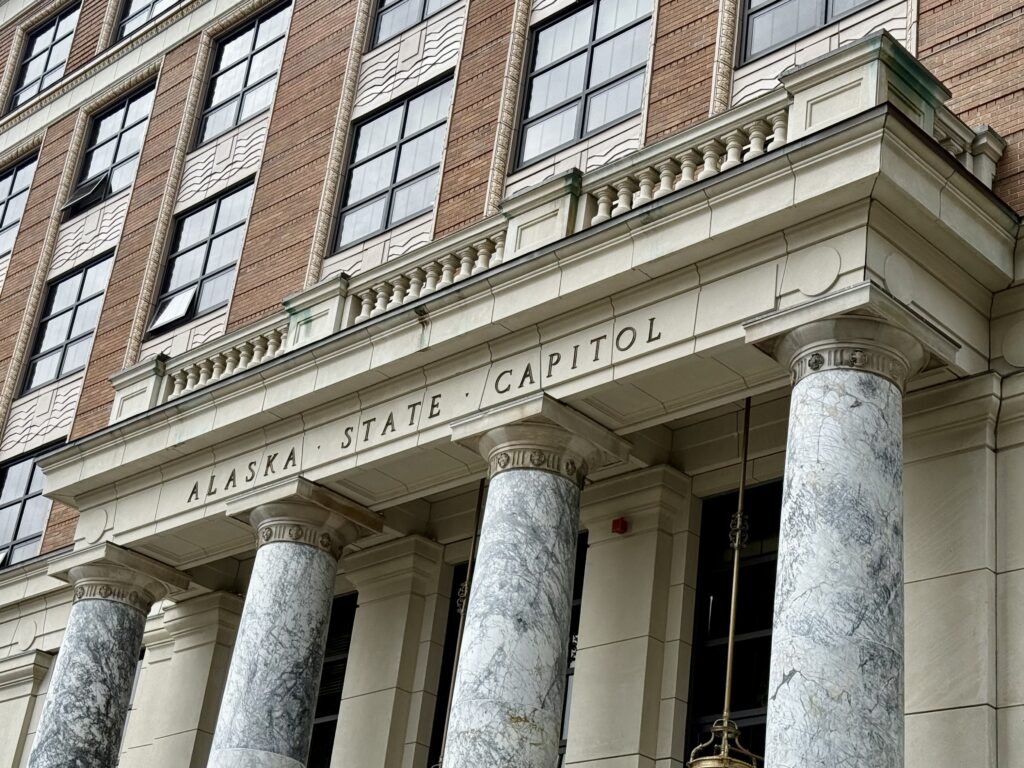
The governor and leading members of the Senate have met several times in closed-door meetings, frequently gathering in the governor’s cabinet room on the third floor of the capitol even as tour groups walk the halls outside the room.
Late Thursday afternoon, after the Senate Finance Committee canceled scheduled meetings for a second consecutive day, Senate President Gary Stevens, R-Kodiak, said the committee will release a revised version of the tax-break bill about 9 a.m. Friday morning.
After meeting in a joint session with the House at 10 a.m. Friday to consider possible veto overrides, the full Senate will consider the tax-break bill, Stevens said.
He declined to say what changes, if any, the Senate Finance Committee will make to the bill before it reaches the full Senate.
Last week, the Alaska House voted 34-5 to replace the state’s 2% petroleum property tax with a smaller tax on gas shipped through the pipeline.
Under current law, the pipeline would generate $47 billion for the state and boroughs along the route through 2062, according to figures from the Alaska Department of Revenue.
The House-passed bill would drop the expected revenue to about $31 billion. The state would still collect production taxes, royalties and other fees.
Glenfarne, the pipeline project’s lead developer, has said that replacing the property tax is necessary for it to obtain financing to build the project.
Dunleavy introduced an early version of the tax-break bill in March, and when it failed to pass the Legislature by the end of lawmakers’ regular session on May 20, he called a 30-day special session on the issue.
“My hope is we can get the work done and a bill passed that works to help move this large gas line project forward before midnight Friday,” the governor said in his statement. “If not, we will begin the process again Saturday with another special session.”