For a time growing up, I called a rocket range home.
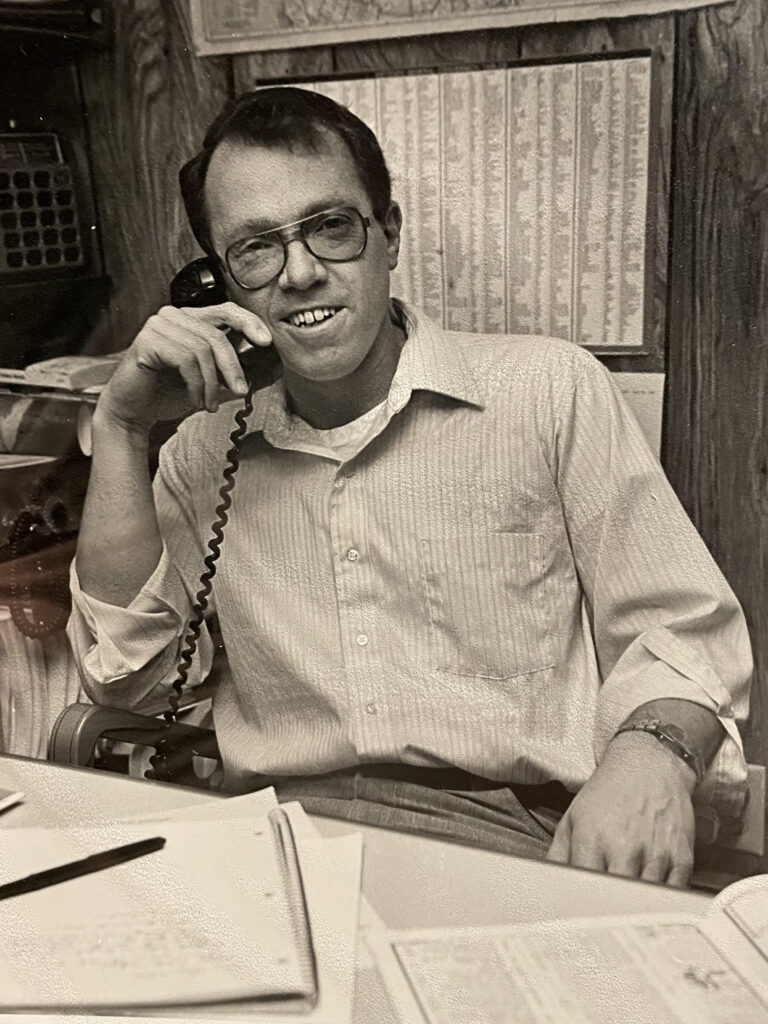
My late father, Neal Brown, directed Poker Flat Research Range outside Fairbanks for 18 years. To the scientists who traveled there, it was a place to send instruments into the northern lights. To me, it was part of childhood: familiar people doing remarkable things in a place where winter demanded as much ingenuity as the science itself.
Helping recently bring his memoir to publication with Fairbanks writer Sue Mitchell has deepened my appreciation of what those people accomplished. “Northern Lights and Rocket Flights: My Years at Poker Flat Research Range,” has also reinforced my belief that scientific research is essential to Alaska’s future and to the nation’s strength.
Alaskans grow up understanding something that maps of the Lower 48 can obscure: Our state occupies a consequential place in the world. We face Russia across the Bering Strait and connect the United States to the Arctic and North Pacific. Our location makes Alaska central to national defense and Arctic affairs. It gives us an understanding of changes that carry consequences far beyond our borders.
But geography alone does not create strength. People, knowledge and institutions turn location into capability.

My father’s book captures how that happens. At Poker Flat, scientific ambition met the practical resourcefulness Alaska demands. Studying the upper atmosphere required sophisticated instruments and careful calculations. Getting those instruments off the ground required launchers, heated shelters, reliable equipment and people who could solve unexpected problems in extraordinary cold.
A mechanic’s experience or a technician’s judgment could be as essential to a successful mission as the scientist’s research plan. People built things, adapted equipment and learned from each launch. An elegant idea still had to work outside in an Alaska winter.
That combination feels familiar to anyone who grew up here. Alaskans value someone who can look at an unfamiliar problem and figure out what to do next. At Poker Flat, that ability helped build a research institution with international importance.
It also took persistence far from the launch pad.
My father traveled to Washington, D.C., and worked with Senators Ted Stevens and Frank Murkowski to help secure funding for Poker Flat. Explaining why research outside Fairbanks mattered to the country was part of keeping the range operating. Those relationships helped connect Alaska’s capabilities with federal support.

His trips reflected a practical truth: ingenuity needs investment. A skilled crew cannot maintain a research facility on enthusiasm alone. Instruments, buildings, training and safety require sustained funding. So does the patient work between discoveries.
That continuity matters strategically as well as scientifically. A nation’s ability to operate in the Arctic depends partly on understanding its environment and sustaining people who know how to work there. Alaska’s research institutions help develop both that knowledge and that expertise.
Poker Flat offers a concrete example. Research into the aurora and upper atmosphere can improve our understanding of space weather, including conditions that affect satellite navigation. Understanding the environment above Alaska has practical implications for technologies on which civilian communities and military operations depend.
Across the state, research into permafrost, oceans, earthquakes and other natural systems also informs decisions about infrastructure, transportation and community safety. Alaska is a place where knowledge with national importance is generated.
The benefits begin at home. Research supports skilled employment, brings visiting teams into local businesses and gives young Alaskans opportunities to become scientists, engineers and technicians. A child watching a rocket launch can discover that ambitious work happens here, with Alaskans helping lead it.
I live in New York now, but Fairbanks is my hometown, and my pride in Alaska has never faded. Working on my father’s book reminded me how much I owe to a childhood surrounded by curious, capable people willing to attempt something difficult.
When I think about Alaska’s future, I think about those people. They understood the possibilities of their location and built the tools to explore them. Alaska’s importance to the nation rests partly on where it is. Its enduring strength comes from what its people can imagine, build and discover there.