The U.S. Department of Energy said on Monday that it has approved $150 million to partially fund a second electrical intertie between Southcentral Alaska and the Interior.
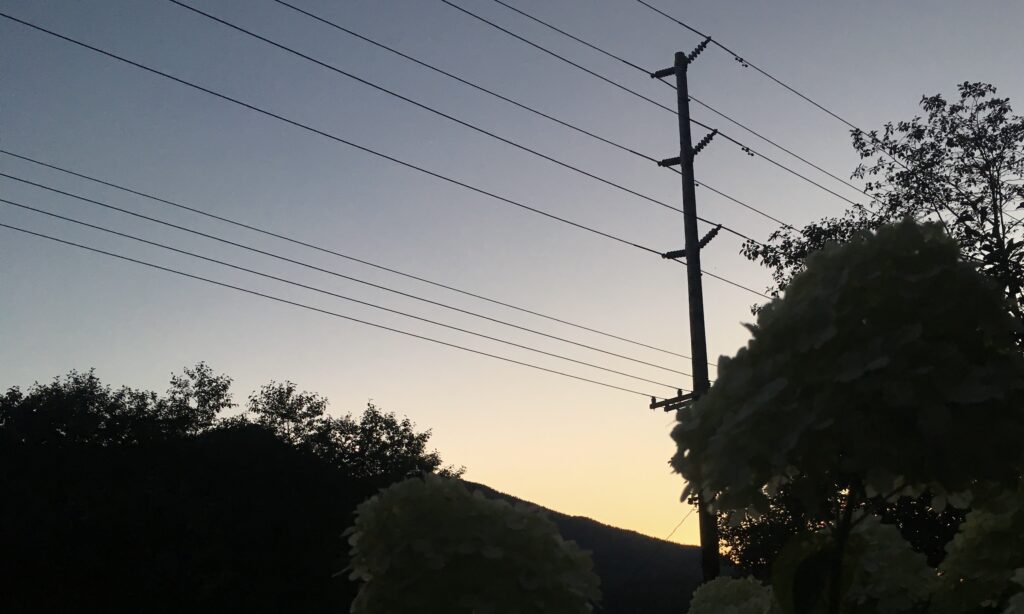
When built, the Beluga-Healy Transmission Project would result in a redundant power link between Fairbanks and Anchorage, increasing the ability of power companies to use the cheapest electricity possible, even if it’s coming from the opposite end of the railbelt.
Construction isn’t expected until after 2030.
The project is expected to cost $418 million altogether, with the new federal money likely going toward engineering, planning and permitting, said Curtis Thayer, executive director of the Alaska Energy Authority.
The remaining $268 million could come from other federal grants, the state, or even AEA itself, through loans.
AEA has been planning the second intertie for almost five years as part of a broader campaign of electrical upgrades across the state but didn’t intend to go ahead until other parts of that campaign — including high-voltage links to support a newly renovated Bradley Lake hydroelectric project — came online.
On Monday, Thayer said the announcement came as a surprise. He had heard last week that the state was in the running for a large grant through a Department of Energy program intended to benefit defense readiness, but he didn’t know until Monday that AEA had won.
Alaska’s existing intertie was built in the 1980s and is used primarily for shipping lower-cost hydropower and natural gas power north to Fairbanks. In recent years, it has also been used to ship coal-fired power south to Anchorage amid natural gas shortages.
Adding a second intertie increases the amount of power that can flow north or south, something that could encourage the development of wind or solar power plants that could provide cheaper power, albeit intermittently.
A second link also means that when the first intertie is upgraded and replaced — something intended in a separate project — power will continue to flow across the railbelt.
Monday’s grant comes from the Defense Production Act and $1 billion approved by Congress and President Donald Trump for energy-related projects deemed critical to national security.
Most of Alaska’s military bases use energy that flows through the intertie, and the state’s Congressional delegation emphasized that fact as it lobbied for federal funding.
On Monday, the three members of the delegation — Rep. Nick Begich III and Sens. Lisa Murkowski and Dan Sullivan, all Republicans — issued statements in support of the new grant.
Sullivan and Begich are running for re-election this year, and on Monday, Vice President J.D. Vance was scheduled to travel to Fairbanks in order to campaign for both men, as well as other Republicans seeking office in November’s general election. According to Reuters, Vance was expected to speak about the grant during a rally at Fairbanks International Airport.