

‘It’s a challenging time these days in the diamond sector,’ says mining finance professor
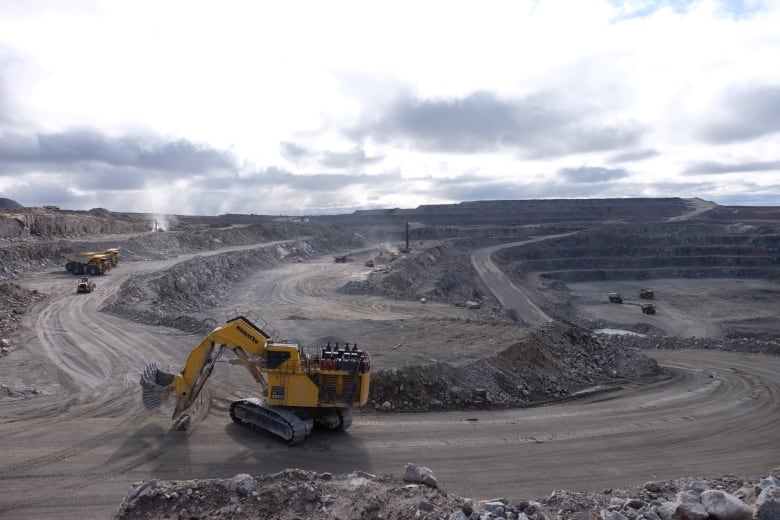
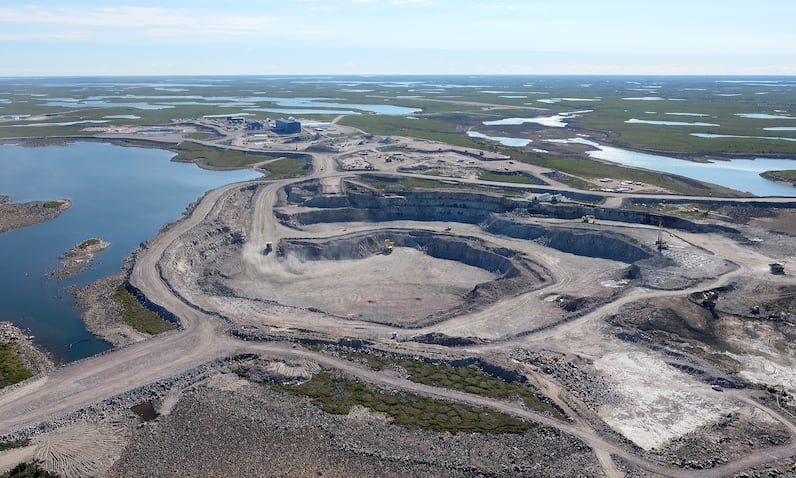
Mountain Province Diamonds, the company that co-owns the Gahcho Kué diamond mine in the N.W.T, plans to voluntarily delist its shares from the Toronto Stock Exchange (TSX) this week — and one mining finance expert says it’s likely a sign that the company is in trouble.
The Toronto-based company said in a news release earlier this month that it would be delisted from the TSX at the end of trading on or about July 17.
Since 2009, Mountain Province Diamonds has a 49 per cent stake in Gahcho Kué, with De Beers holding the other 51 per cent. De Beers also acts as the mine’s operator.
The news release also notes consulting firm KPMG resigned as Mountain Province Diamonds’ auditor, though no date is provided for when that happened. As of July 2, the position had yet to be filled.
Mountain Province Diamonds did not respond to CBC’s request for an interview.
KPMG declined to comment on its resignation as auditor, citing that the firm does not publicly comment on client matters.
Mountain Province Diamonds’ delisting from the TSX, along with its auditor resigning, suggests financial trouble, according to Carlos da Costa, an adjunct finance professor at the University of British Columbia who teaches mining finance.
Da Costa said that given the state of the diamond mining industry, those distress signals are not surprising. Demand for natural diamonds has plummeted and lab-grown diamonds have introduced stiff competition.
“It’s a challenging time these days in the diamond sector,” he said.
The delisting move comes as Ekati, up until recently the N.W.T.’s other remaining diamond mine, enters receivership after failing to find a buyer to keep it afloat.
Delisting from the stock exchange
Mountain Province Diamonds obtained shareholder approval to delist as it seeks to restructure.
Restructuring can involve “a lot of things,” da Costa said. Typically, it means major changes to a company’s structure, debt or operations to ease financial pressures.
According to Mountain Province Diamonds’ July 2 news release, its own restructuring may involve a transaction to go private, a consolidation of its shares that would reduce the number of existing shares but potentially increase their individual value, or other options.

Delisting ahead of restructuring provides more privacy for a company, da Costa said, because it takes away some of the disclosure and governance requirements of companies whose shares are listed on the TSX.
“You’re naked when you are publicly listed,” he explained. “If I had all these things happening behind the scenes, you know, the best way to do it is not be in the public’s eye.”
Da Costa said on its own, voluntary delisting is not necessarily a sign of financial distress. But he points to the planned restructuring, the auditor’s resignation and some vacancies on the company’s board as other signals that Mountain Province Diamonds is in trouble.
Auditors ‘very risk averse’
KPMG is one of the “Big Four” firms globally when it comes to accounting and professional services, including auditing.
Da Costa said the firm resigning as an auditor is significant, because auditors are “very risk averse.”
He called it “a strong signal that something could be going the wrong way.”
Da Costa said auditors usually resign because of “going concern doubt,” an accounting term that refers to auditors not being convinced that a company will be able to pay its debts and continue its normal operations.
Mountain Province Diamonds and KPMG have not confirmed the reason for the latter’s resignation, but da Costa said in his experience, an auditor’s resignation suggests it is unwilling to sign off on future financial statements, which is often a precursor to companies restructuring, facing insolvency, or breaching their debt obligations.
“The fact that they’re undertaking a search for a new auditor, especially when they’re a publicly listed company, that’s a serious issue,” he said. “These are all signals.”
Da Costa said Gahcho Kué’s immediate future is not necessarily at risk, because of the stability De Beers can provide even as Mountain Province Diamonds potentially undergoes major changes.
De Beers is not impervious to headwinds in the diamond sector, however. The diamond giant made headlines earlier this week for opting to pause production at Venetia, a flagship South African diamond mine, for the next two years.
De Beers’ news release announcing the production pause notes that decision follows the move to pause an expansion project at Gahcho Kué earlier this year.
Gahcho Kué was previously expected to close in 2031 but De Beers now expects operations will end in 2028, according to a report earlier this year from the Mackenzie Valley Land and Water Board.
Related stories from around the North:
Canada: Grays Bay progress good news for Arctic Economic and Security Corridor, N.W.T. mining industry says, CBC News
Greenland: Investor interest in Greenland mining rises after Trump threats, minister says, Reuters
United States: Alaska Ambler Road project back in focus as company outlines vision for work ahead, Eye on the Arctic