
Territorial, federal officials say oversight board for closed mine could be dissolved
The N.W.T. and federal governments have opened consultations on the proposed dissolution of the Independent Environmental Monitoring Agency (IEMA), the watchdog that has kept an eye on developments at the Ekati diamond mine site for nearly three decades.
A recent letter to IEMA from the territory’s environment minister and the federal minister of northern affairs says they have begun taking input from affected parties on the proposed end of the environmental agreement that established IEMA as an oversight board.
According to the letter, IEMA could be dissolved after the Ekati agreement is terminated.
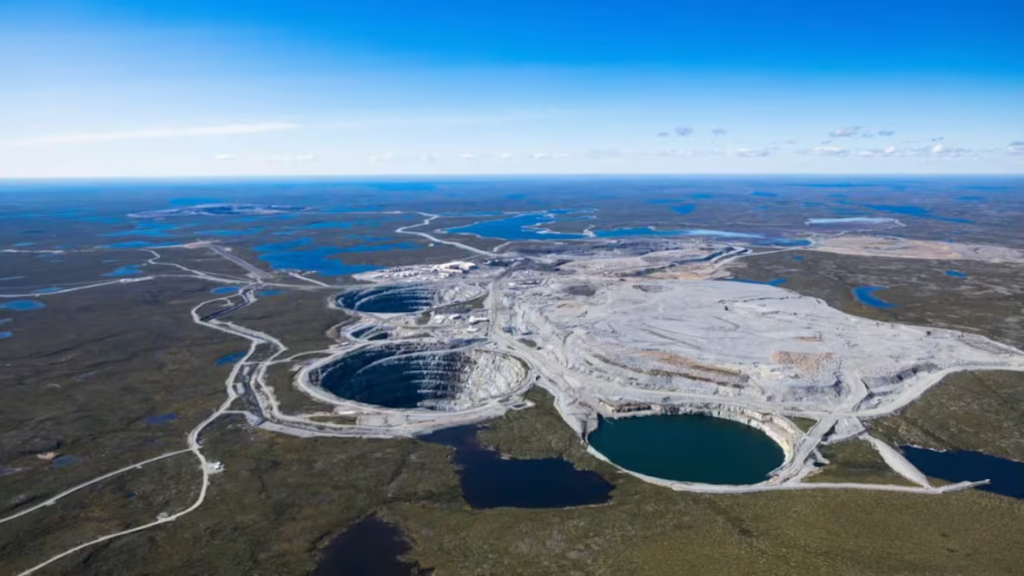
The Ekati mine ended production earlier this year after its operator Arctic Canadian Diamond Company went into receivership. As no other company stepped in to take over, the mine is now a public liability, with the government of the N.W.T. responsible for remediation and closure work being carried out by receiver PricewaterhouseCoopers.
The government is currently using the $326-million reclamation security fund set aside by the previous operator to cover closure costs, including the funding for IEMA.
The ministers’ letter indicates that financial pressures are the driving concern, stating that the two governments are considering whether funds currently required to go to the oversight board and to fulfill the environmental agreement should go directly to reclamation activity.
In addition to asking for IEMA’s views on the proposal, the governments are also canvassing Indigenous governments and organizations, including the Tłı̨chǫ government, Yellowknives Dene First Nation, Łutsel K’e Dene First Nation, North Slave Métis Alliance and Kitikmeot Inuit Association.
IEMA executive director Mark Casas argues that the oversight board should not be dissolved, and that concerns about it being a drain on funds are shortsighted.
He said that the board will be critical in helping avoid costly mistakes during reclamation at the highly complicated site, which includes 10 open pits.

“To get the input that we’re providing, it’s at a huge discount to what you would actually pay a consultant to provide that information,” Casas said. “The closure cost up front, you know, is one thing, but the cost of getting something wrong and having to go back is, you know, orders of magnitude higher.”
Casas noted that the mine does not have an approved closure plan following the sudden end of production. A plan will have to be reviewed and approved by the Wekʼèezhìı Land and Water Board.
He said that shutting down IEMA would eliminate a second technical review input of that closure plan, with the government also no longer providing independent input as it now controls the site.
“You can’t just create an organization like IEMA,” Casas said. “We’ve been around for over 30 years now. That kind of corporate history and knowledge, if you do get rid of it, you can’t just bring it back if you’re like, ‘oh, sorry, we made a mistake.’ The continuity of it is important.”
CBC News has contacted the Indigenous governments who are party to the Ekati environmental agreement for their views on the potential closure of IEMA.
Eileen Marlowe, manager of wildlife, lands and environment for the Łútsël K’é Dene First Nation (LKDFN), says she sees an opportunity in the debate around IEMA’s continued operation for Indigenous governments and citizens to take a leading role in cleaning up the mine.

Marlowe was critical of the independent oversight board for not doing more over the last three decades to hire, train and retain Indigenous leaders but was hopeful that this would change.
“I think the onus is on us as Indigenous people to start to take control of that narrative and start dictating how we fit into the system and how we would like things to be done where the environment is concerned,” Marlowe said.
“And I think if we take the lead, then we will ensure that we’re part of the conversation, part of the remediation and closure.”
Earlier this year, N.W.T. Environment Minister Jay Macdonald ordered the shutdown of the board overseeing the Diavik diamond mine by March 2027. Mine owner Rio Tinto must also establish an annual $150,000 fund for Indigenous-led traditional knowledge monitoring over three years at that site.
Related stories from around the North:
Canada: N.W.T., Yukon mining and energy projects get boost at Canada Investment Summit, CBC News
Finland: Lapland among regions not in favour of wind power compensation for eastern Finland, Yle News
Greenland: Greenland rules out winter 2026-27 drilling for Nunap Qeqqa/Jameson Land oil project, Eye on the Arctic
Russia: Europe boosts LNG trade ahead of the ban, The Independent Barents Observer
Sweden: Electricity prices climb in Sweden as Russian gas pipeline goes offline, Radio Sweden
United States: ‘You just move forward’: Greenland Energy oil exploration delayed by a year, The Canadian Press