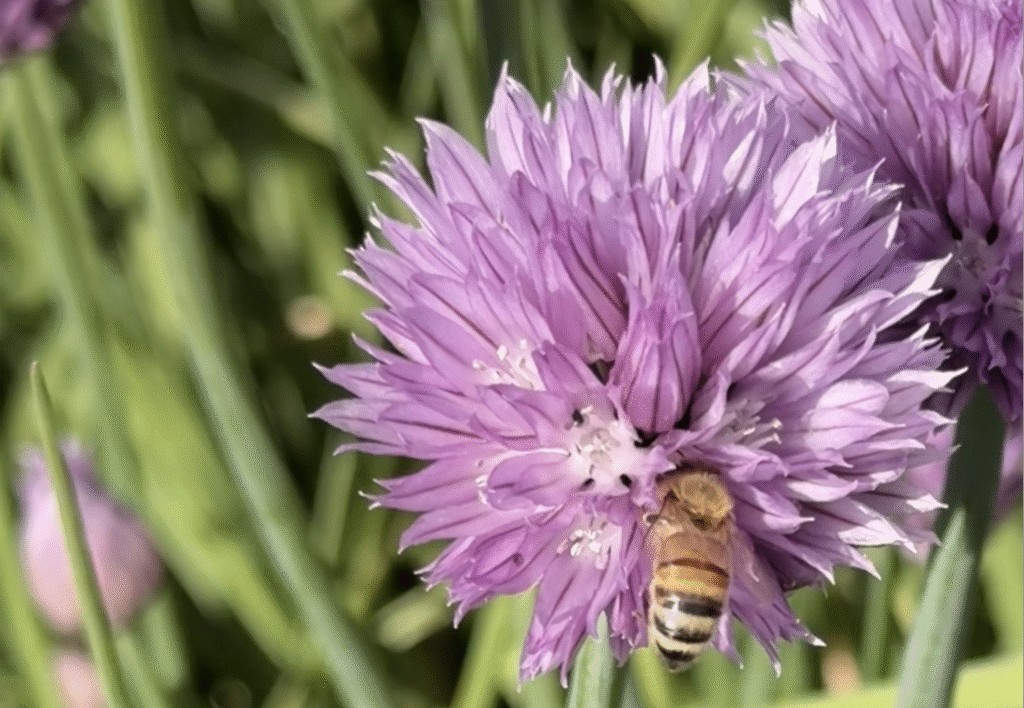
On a bright June morning in Soldotna, a homeowner steps into the yard with a cup of coffee and notices a bumblebee working its way across a patch of blooming chives. It’s a small moment, but one that reflects a larger truth: the choices Alaskans make in their gardens, on their land and in their communities can have a meaningful impact on the state’s native bees.
Alaska is home to more than a hundred species of native bees, from familiar bumblebees to tiny solitary bees that nest in the ground or in hollow stems. These insects pollinate wildflowers, berry bushes and many of the plants that support wildlife and local food production. As Alaska’s climate changes and invasive species spread, the role of everyday Alaskans in supporting pollinators has never been more important.
Plant flowers that feed bees
One of the simplest and most effective ways to help native bees is to plant flowers that provide nectar and pollen throughout the growing season. Early‑blooming willows, mid‑summer fireweed and late‑season asters offer food when bees need it most. Even small patches of flowers in yards, community gardens or along driveways can make a difference.
Native plants are especially valuable because they adapt to Alaska’s climate and support the bees that evolved alongside them. But many common garden plants — such as chives, raspberries and sunflowers — also provide excellent forage.
Plant native flowers in clumps rather than scattering individual plants, because larger patches are easier for bees to find and allow them to gather food more efficiently.
Protect nesting habitat
Unlike honeybees, most native bees in Alaska do not live in hives. Many nest in the ground, while others use hollow stems, old rodent burrows or natural cavities in wood. Leaving parts of your yard slightly wild—with bare soil, dead stems or undisturbed corners—can provide nesting habitat for solitary bees.
Avoiding heavy mulch, landscape fabric or frequent tilling can also help ground‑nesting bees find places to raise their young.
Limit pesticide use
Pesticides can harm bees directly or reduce the availability of flowers they depend on. If you choose to use pesticides, apply them sparingly, follow label instructions carefully and avoid spraying when flowers are in bloom or when bees are active.
Many gardeners find that healthy soil, diverse plantings and natural predators reduce the need for chemical treatments.
Support local efforts to monitor bees
Community science programs, including the Alaska Bee Atlas, rely on volunteers to help document where bees live and how their populations are changing. Participating in these efforts — or simply sharing observations from your yard — helps scientists build a clearer picture of Alaska’s pollinators.
Even small contributions, such as photographing bees or planting a pollinator‑friendly garden, can support statewide conservation efforts.
Reduce the spread of invasive plants
Invasive species such as white sweetclover and bird vetch can outcompete native plants and alter the availability of food for bees. Learning to identify invasive plants, removing them when possible, and choosing non‑invasive garden species can help protect Alaska’s natural habitats.
Local Cooperative Extension offices and conservation districts offer resources to help homeowners manage invasive plants responsibly.
A shared responsibility
Supporting native bees does not require large tracts of land or specialized knowledge. It begins with simple choices — planting flowers, protecting nesting sites, reducing pesticide use and staying informed about changes in Alaska’s ecosystems.
On that June morning in Soldotna, the homeowner watches the bumblebee disappear into the chives and realizes that small actions can add up. Across Alaska, thousands of similar moments are helping create a landscape where native bees can thrive.
This is the fifth of a six commentary series about Alaska’s native bees.