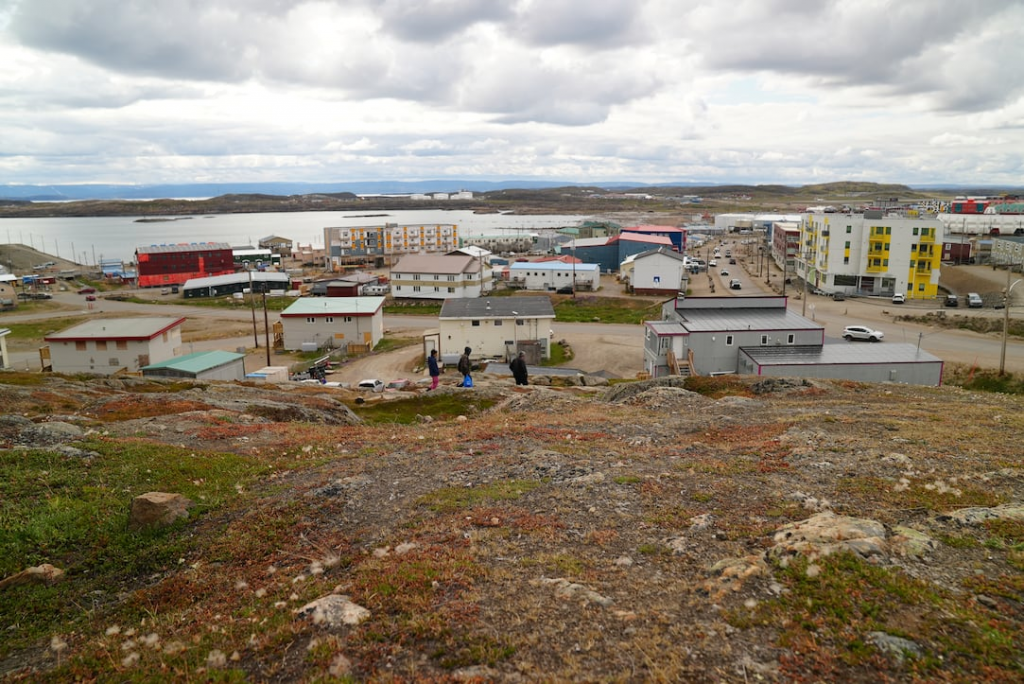

There may have been fewer working-age residents in Iqaluit in 2025, but that didn’t ease the city’s housing squeeze, says a new report from the Canada Mortgage and Housing Corporation.
“Despite net outflows among renter-heavy populations, underlying housing needs stemming from overcrowding continued to keep demand ahead of available supply,” the report said.
“As a result, nearly all unit types remained virtually fully occupied.”
Although Nunavut’s capital city saw a small increase in rental housing in 2025, that didn’t alter its vacancy rate of 0.3 per cent that’s remained unchanged for the third consecutive year.
In the neighbouring Northwest Territories, the capital city of Yellowknife was also feeling the crunch, with its vacancy rate dropping to 1.3 per cent despite robust construction projects.
“A record expansion in the 1-bedroom rental stock did little to ease market conditions, as vacancy rates increased only modestly,” the report said. “Meanwhile, 2-bedroom vacancies fell to just 0.8 per cent, despite substantial supply growth the previous year.”
Meanwhile, in Yukon’s capital city of Whitehorse, where the population was growing more slowly in 2025 compared to previous years, the vacancy rate rose to 1.9 per cent.
Ownership patterns
Unlike Whitehorse and Yellowknife, residential and commercial land in Iqaluit is generally leased rather than owned outright. The report says land-title transfers fell to 20 in 2025, about half the recent average.
“Fewer working-age residents and high reliance on transient workers limited ownership demand,” the report said. “At the same time, severe affordability and supply constraints further limited entry into the ownership market.”
Meanwhile, Whitehorse and Yellowknife both saw home sales increase in 2025, helped in part by the 2024 Bank of Canada interest rate cuts that lowered borrowing costs, the report said.
In Whitehorse, home sales went up 21 per cent, while in Yellowknife, they went up 7.4 per cent.
The Canada Mortgage and Housing Corporation’s annual northern housing report started in 2020 and analyzes home ownership, social housing and rental markets in Canada’s three northern territories.
Comments, tips or story ideas? Contact Eilís at eilis.quinn(at)cbc.ca
Related stories from around the North:
Canada: Federal, territorial gov’ts reach ‘agreement in principle’ to build 560 N.W.T. homes by 2030, Eye on the Arctic
Finland: Housing prices keep falling, except in northern Finland, Yle News
Greenland: Despite housing shortages, Greenland razes colonial apartment blocks, Blog by Mia Bennett
Sweden: Arctic Municipality in Sweden ups recruitment perks with housing, ski passes, bonuses, Radio Sweden
United States: Greenland ‘Freedom City?’ Rich donors push Trump for a tech hub up north, Reuters