
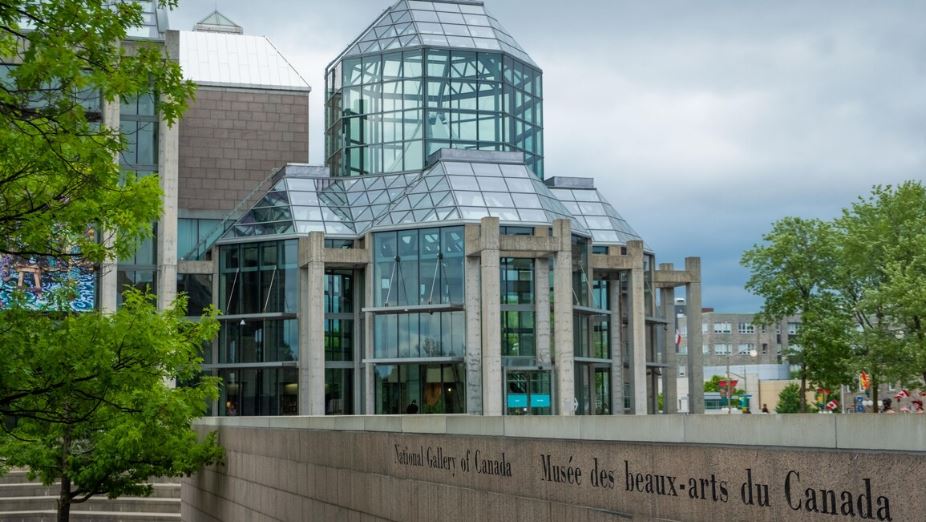
The National Gallery of Canada (NGC) has announced the unveiling of Qillaniq, an exhibition entirely dedicated to contemporary artists from the Arctic circumpolar region, running from June 12 to September 20, 2026.
According to the NGC, the exhibition brings together more than 80 artworks created by over 70 artists, making it the largest circumpolar exhibition ever organized.
The institution explains that the exhibition’s title, Qillaniq (pronounced qeel-lah-neeq), is an Inuktitut word that evokes the shimmer of sunlight or moonlight reflecting on water.
Organizers state that this concept serves as a metaphor for the brilliance and resilience of circumpolar Indigenous peoples in the face of colonization, while illustrating their deep connection to the land through art.
An Absolute Demand to Exist in the Present
In the NGC’s official press release, its Director CEO, Jean-François Bélisle, emphasized the paradigm shift proposed by the exhibition.
While the world’s gaze often turns to the Arctic through the lens of crisis and geopolitical urgency, Qillaniq approaches this era from a different angle, Jean-François Bélisle points out. This historic exhibition does not ask permission to exist in the present—it demands it.
The Director CEO also expressed his deep gratitude to the all-Indigenous curatorial team and the participating artists, adding that their creative strength highlights how contemporary Indigenous art is currently shaping global cultural dialogues.
Celebrating “Radical Joy” in the Face of Adversity
The exhibition was put together by an international, all-Indigenous team.
The Gallery specifies that this team includes Jocelyn Piirainen and Ooleepeeka Eegeesiak from the NGC’s Indigenous Ways and Decolonization department.
They were supported by guest curators Liisa-Rávná Finbog (Sámi), Nadia Jackinsky-Sethi (Alutiiq), Taqralik Partridge (Inuk), and Laakkuluk Williamson (Kalaaleq).
In a press release, the team described the exhibition as a “[…] celebration of those who make love their response to adversity. These artists are at the forefront of the global contemporary art scene.”
This message of hope and solidarity is shared by Steven Loft, Michelle LaVallee, and Reneltta Arluk, members of the leadership team for the Indigenous Ways and Decolonization department at the NGC.
They explained that despite the major climate and geopolitical disruptions shaking the Arctic, the voices of these Inuit, First Nations, Sámi, and Alaska Native artists remain “courageous, strong, and revelatory.”

Breaking the Institutional Mold and Major Collaborations
The NGC indicates that Qillaniq deliberately rejects rigid institutional traditions in favor of a multidisciplinary approach (including drawing, painting, video, installation, and performance).
The exhibition transcends modern geopolitical borders to connect Alaska, Inuit Nunaat, Sápmi, and Denendeh, the institution adds.
The event also marks a historic milestone, as the iconic installation by artist Máret Ánne Sara, titled Pile o’Sápmi Supreme (2017), will be presented for the very first time in North America.
Furthermore, the museum confirms that eight new works were specifically commissioned for the occasion.
Funding and Accessibility
The organization of Qillaniq has benefited from extensive financial and diplomatic support.
The NGC notes the support of the National Gallery of Canada Foundation, the Global Arctic Leadership Initiative of Global Affairs Canada, Armstrong Fine Art Services, as well as the Curating Indigenous Circumpolar Cultural Sovereignty (CICCS) research project based at York University.
The Embassies of Denmark, Finland, Norway, and Sweden in Canada also collaborated on the project.
Related stories from around the North:
Canada: Montreal museum’s new Inuit gallery envisioned as space for sharing inspiration, Eye on the Arctic
Finland: Sami NGO demands removal of “Far Northern Attire” from Square Enix’s Final Fantasy, Eye on the Arctic
Norway: Certification marks help both Sami artisans and consumers, says council, Eye on the Arctic
United States: This American company is selling ‘ulu-inspired knives.’ Inuit say, that’s not right, CBC News