
By Chris MacIntyre
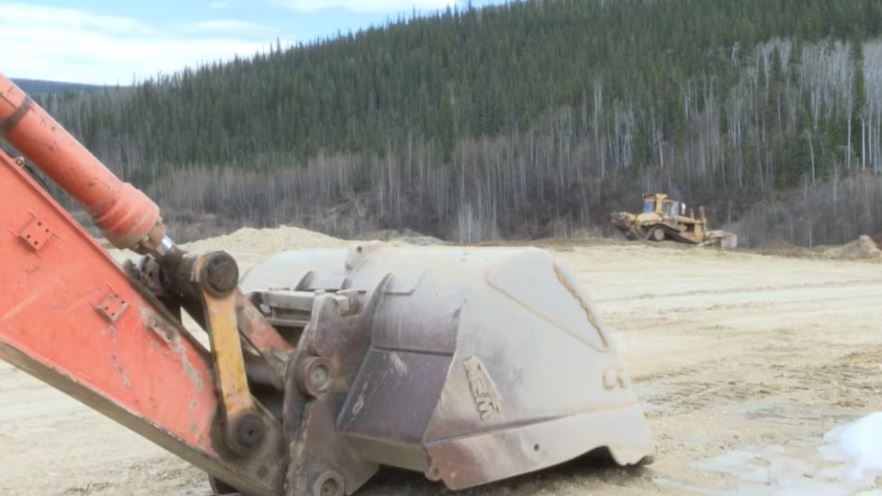
A backlog of licence and permit renewals has had some placer miners in the Klondike uncertain whether they’ll be able to work in a few years.
But the Yukon government says it’s been working to reduce the backlog of renewal applications — and keeping miners working as a result.
According to the Klondike Placer Miners’ Association (KPMA), some miners’ operating licences expired last year after waiting for years at a time.
Once a permit or licence has expired, it’s illegal for lapsed licence holders to do any work on their site. That means no moving equipment, and no sluicing material.
“We are now issuing a decision document associated with permitting every second day,” said Ted Laking, Yukon’s minister of energy, mines, and resources. “We’ve issued more permits by the end of May [of] this year than the department did all of last year.”
“We understand we have a lot more to do,” he said. “The backlog was quite big, but we’re getting through it.”
Laking blames the previous territorial government for letting the situation get to a critical point, saying it hadn’t “previously been tracking how long things have been in the system” and that “they weren’t even aware of how long the backlog is.”
He said playing catch-up on renewal applications is only one part of the solution. Another is to ensure a similar situation doesn’t happen again when it comes time to renew licences.
That’s where KPMA president Neil Loveless said his organization and members must take a proactive role.
Placer licences are good for 10 years. Rather than waiting until the very last minute to submit an application to renew, Loveless said, miners should plan ahead.
“There’s a large group of us — about 150 placer miners — that are typically active in the season,” he said. “[Of] those permits, I would say the majority of them all go through the permitting cycle at the same time. So it ends up leading to a backlog.”
“We’ll try to work towards making sure that miners get in potentially at year six or year seven on their licence, to kind of front-run it.”
Loveless said the KPMA is happy with the rate at which the territorial government has been working to address the situation. He said he’s noticing more licences being approved this year compared to the same time last year
After a few seasons filled with uncertainty, he says it’s a welcome change.
Related stories from around the North :Canada: Damage at Yukon’s Eagle mine site could be ‘worst-case scenario,’ says local mayor, CBC News
Sweden:Swedish developer GRANGEX buys iron ore mine on Norway’s border to Russia, The Independent Barents Observer
United Stated: Canada and U.S. make co-investment in Fortune Minerals N.W.T. project, The Canadian Press