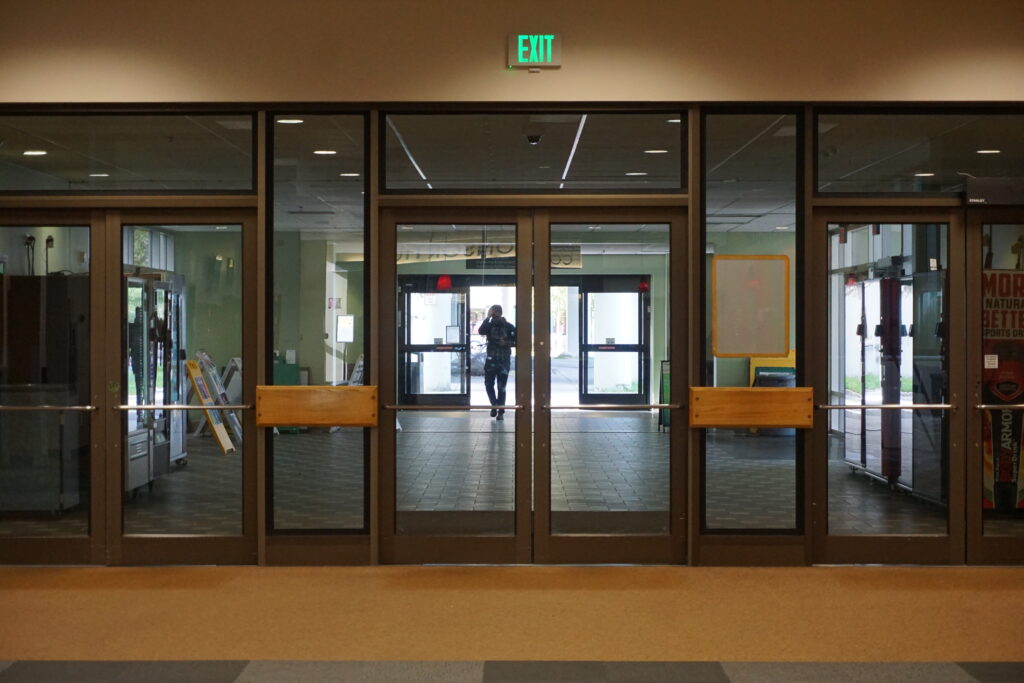
I didn’t learn about the permanent closure of the University of Alaska Anchorage Testing Center through a campus press release or a community town hall. I learned about it on a quiet summer afternoon while taking my 14-year-old son to sit for an exam for college credit. Watching a teenager step up, take initiative and unlock his potential early is an incredible feeling—a vivid testament to what is possible when accessible local infrastructure exists to lift our kids up.
But as we were leaving, a staff member warned us to schedule whatever remaining exams we could as quickly as possible. She was exasperated—and rightfully so. She had just been notified via a Friday afternoon email that the center was closing permanently on July 30th, and the entire staff was out of a job. Just like that, with only a few weeks’ notice in the dead of summer, dedicated employees were discarded and an essential public institution was quietly dismantled.
The staffer said that, according to the university’s email, the rationale centers on reallocation: stripping funds from existing student support services to concentrate resources on recruitment, registration and driving up top-line enrollment numbers. But this strategy reveals a shortsighted paradox: What is the point of pouring money into recruiting new students if we gut the very infrastructure required for them to test, advance and graduate?
What makes this closure so catastrophic is that UAA’s Testing Center was never just a room with computer desks. It was Southcentral Alaska’s only comprehensive, all-in-one physical testing hub. Unlike small, specialized private sites that handle only specific vendors, UAA’s facility managed the entire academic and professional spectrum—college course exams, ACCUPLACER placement, statewide professional licensing boards, trade certifications and national standardized tests like the ACT. No other civilian venue in Anchorage possesses the authorization, footprint or operational scope to absorb that workload. Closing UAA doesn’t shift that traffic elsewhere; it destroys the hub entirely.
When pressed on alternatives, the university points to automated online software and military facilities, but both fall apart under basic scrutiny. Automated proctoring like HonorLock relies on a myth of digital equity that Alaska’s infrastructure cannot support. In a state where broadband frequently stutters, a single Wi-Fi drop can void months of hard work. Additionally, invasive AI webcams present an insurmountable barrier for neurodivergent students or working adults in crowded households. Recommending the testing space at Joint Base Elmendorf-Richardson is equally flawed: JBER sits behind military security checkpoints. Public university infrastructure funded by Alaskan tax dollars should never require a visitor pass, background check or military sponsorship to access. Access to advancement should not be behind a locked gate.
The ripple effect reaches far beyond college classrooms and straight into our regional workforce. By eliminating our central testing anchor, we are stranding local nurses, teachers, contractors and ambitious young Alaskans in an administrative wasteland. Working Alaskans seeking career-advancing licenses now face the absurd prospect of spending thousands of dollars flying around the state—or worse, to the Lower 48—just to sit in a proctored room for a two-hour exam.
Alaska should be opening doors for its people, not slamming them shut on a Friday afternoon. Watching my son earn college credit showed me firsthand what happens when community infrastructure actually supports educational ambition. University leadership and local community partners must halt this closure immediately and establish an accessible, public-facing civilian alternative before the door locks Alaskans out for good.