Cook Inlet coho runs have fallen short of escapement goals for several years, and this season Mat-Su streams closed to coho retention, much as they have for Chinook. A Board of Fisheries regulation aimed at getting more coho back to their rivers passed in March but has yet to take effect.
Story by George Krumm. Originally published in the Editor’s Creel column in the October/November 2026 issue.
When I first moved to Alaska, it was an easy thing to head up the Parks Highway in late July or August, perhaps to Goose Creek or Montana Creek, and catch a three-fish limit of silvers (coho salmon). All the Parks Highway streams produced great coho fishing, and were open seven days a week for silvers. It was simply glorious to head up north early in the morning before work, catch a limit of coho, and be back in time to go to work. Or, you could head up in the evening and have similar success. It was the kind of fishing that influenced me to move to Alaska in the first place.
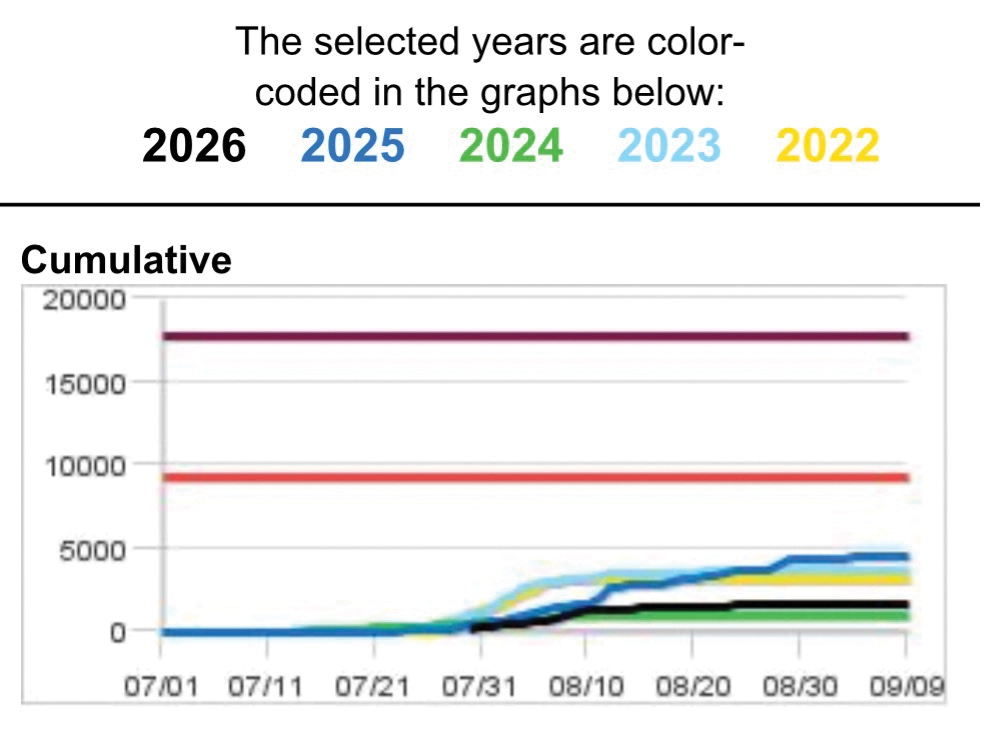
But nowadays, we find our Upper Cook Inlet (UCI) coho following a trajectory similar to Cook Inlet Chinook salmon. Runs are way down. Of the few streams that are closely monitored, some of what used to be the best streams for coho are struggling to make it to the bottom of the Sustainable Escapement Goal Range (SEG). In fact, this year marks the fifth year in a row that the Little Susitna didn’t make it to the bottom of the Sustainable Escapement Goal (SEG) range. It’s not even getting close, like roughly 50% of the way to the lower end of the goal for the past five years. That means it should now be designated a Stock of Management Concern (SMC), and the Alaska Department of Fish and Game (ADF&G) should immediately develop an action plan and define the Sustained Escapement Threshold (SET) for that stock as outlined in the Alaska Administrative Code. Considering no SETs have been set for ANY of the many Stocks of Management Concern (SMCs), I’m hopeful they will turn a new leaf and do their jobs in this area, but I’m not holding my breath.
Proposal 186 and Board of Fisheries Approval of RC 161
It is possible some of this year’s UCI coho run failure could have been prevented. In fact, Matanuska Valley Fish and Game Advisory Committee member and Mat-Su Borough Fish and Wildlife Commission member, Andy Couch, submitted Proposal 186 to the Alaska Board of Fisheries (BoF) in March to restrict Central District commercial drift gillnet fisheries to allow more UCI coho to pass through the fishery and get back to their rivers. Prop 186 was modified and reintroduced by BoF member Greg Svendsen and renamed Record Copy (RC) 161. RC 161 was passed by the BoF in March in a 4-2 vote. Generally, when the BoF passes something, it becomes law after a relatively quick legal review.
Department of Law Delay and the Re-Notice of RC 161
But not this time. Commercial fishermen strongly opposed RC 161, and RC 161 was sent to the Alaska Attorney General’s (AG) office for “legal review” as is normal. What is not normal is that the AG has had months to approve it but instead, sat on it. It has been there for five months now. The AG is still sitting on it. I reached out to the AG’s office for status, but the person I talked to didn’t know what I was talking about, and in the ten minutes I held, couldn’t find any information. I also emailed and left a voice message for ADF&G Deputy Commissioner Israel Payton to see if he could provide an update. He did not respond but Commissioner Douglas Vincent-Lang did. He said, “The regulations attorney at Department of Law determined that this and other regulations adopted at the statewide meeting need to be re-noticed and adopted.
Department of Law is working with ADF&G and the Board to make that happen.” I don’t know if this has ever happened before, and asked the Commissioner what this actually means and if it has ever happened before. He said, “It means they need to go through another round of public comment and then be voted on again. It has happened at the Board of Game as a result of a lawsuit.” This is NOT the usual procedure. I pressed him regarding why the Department of Law is doing this and he said, “Ask them.” I was hoping he had already done so and had an answer, since the AG’s office didn’t give me any info.
Commercial Interception of UCI Coho and Mat-Su Sport Fishery Closures
Since the AG is sitting on RC 161, the Cook Inlet drift- and set gillnetters prosecuted their fisheries like they always have, and as usual, intercepted a large number of UCI-bound coho—at least 70,000 of them. Many of those 70,000-plus coho were caught in the federally managed portion of Lower Cook Inlet. The Federal zone was allocated up to 16,000 coho, but they actually caught more than 38,000 coho. It is clear work will need to be done there as well to ensure passage of UCI salmon and to avoid the continued bycatch of them in both the federally managed waters, and the state managed waters.
Sportfishing opened normally for UCI coho streams, though perhaps it shouldn’t have based on the low numbers we’ve been seeing for the past several years. I suspect ADF&G opened it because if they closed it and let the commercials continue to fish, the backlash would have been severe. As the season progressed, due to low returning numbers, the sport coho fishery in Mat-Su streams was soon restricted, and ultimately closed to retention of coho in the Susitna drainage (including the Deshka and Parks Highway streams) and Little Susitna. As mentioned previously, the Little Su did not make escapement for the fifth consecutive year and should now become the first coho Stock of Management Concern (SMC) in Alaska. Deshka River coho are doing even worse than Little Su coho, though the weir was washed out more than once in the past five years. Despite the weir being out at times, I think a reasonable, precautionary person (or fisheries manager) would agree that Deshka coho should also be made a Stock of Management Concern (SMC).
Applying Maximum Sustained Yield to Constrained Salmon Stocks
New thinking is needed, both by the entrenched leadership at ADF&G, by the feds managing federal waters affective UCI coho, by our state government officials, and in the commercial fishing industry. It must change. It is not right to manage one species for zero yield (coho, Chinook) so you can continue to maximize commercial harvest of another (sockeye). Maximum Sustained Yield (MSY) applies to all species, not just sockeyes, and the most constrained stocks (Chinook, coho) should be the highest priority and the drivers for policy and regulation.
Proposed Solutions: Enacting RC 161 and Transitioning to Terminal Fish Traps
There are some possible solutions. First, the AG’s office needs to get off their asses and allow RC 161 to be put into law. They need to do their job.
Some longer-term solutions include changing commercial gear types from indiscriminate gillnets in mixed-stock areas, to fish traps in more terminal areas. Traps would allow the commercial harvest of every fish allocated on paper, while allowing passage for non-targeted stocks with minimal mortality. The commercial fishers would probably make more money than ever. Used appropriately, fish traps could be a huge help to recover or prevent continued decline of stocks like UCI coho and Chinook. Some have said this can’t be done.
It can. If we can build the Alyeska Pipeline, we can build fish traps that will work in Cook Inlet. The commercial fishers would benefit from a higher-quality product, maximum harvests every year, and more stable income. The coho (and other salmon) that are struggling would make it back to their rivers, and hopefully escapement goals will be met.
The Future of Coho Sportfishing in Cook Inlet Streams
New thinking is needed, both by the entrenched leadership at ADF&G, by our government officials, and in the commercial fishing industry. The status quo regarding UCI coho interception must change, or coho will continue down the road on which Chinook are currently languishing. The loss of these fisheries is a huge blow to the quality of life for the average Alaskan. The “legal review” delay smells rotten and was not and is not in the best interest of Alaskans or the fish. Unless we stop killing so many coho commercially in Cook Inlet, there is a chance there will soon be no sportfishing for coho in these streams, just like there is currently no Chinook fishing.

George Krumm
About the Author George Krumm
George Krumm is the Editor of both Fish Alaska and Hunt Alaska magazines. He is also a freelance writer/photographer. George has fished and hunted from Patagonia to Alaska and has been writing professionally since 2003. George writes several feature articles per year for various publications, plus he writes the “Editor’s Creel” and “Flyfishing” columns for Fish Alaska magazine, and he wrote the “Stillwater” (flyfishing) column in Fish Alaska for more than nine years. His specialties include single- and two-handed flyfishing, fly tying, and conventional gear fishing for everything from trout to salmon to halibut to white sturgeon. George lived in Alaska for 20 years and now makes his home in the Pacific Northwest.
The post The Upper Cook Inlet Coho Conundrum appeared first on Fish Alaska Magazine.