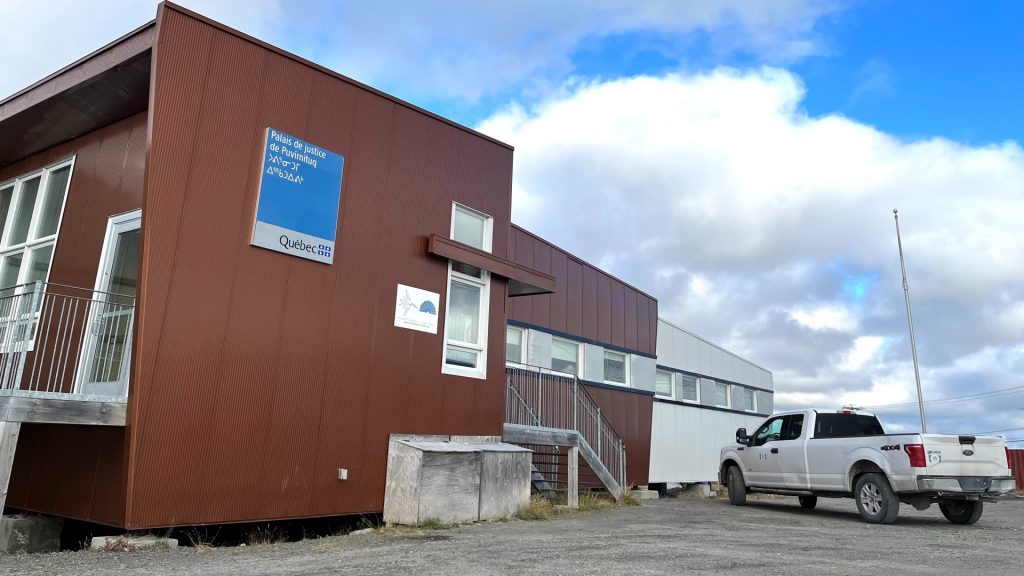
No criminal trials will be held in Puvirnituq or Inukjuak this fall, Radio-Canada has learned.
Four years after the Latraverse report was issued, echoing findings of several previous reports on dysfunction in the Nunavik justice system, the problems continue.
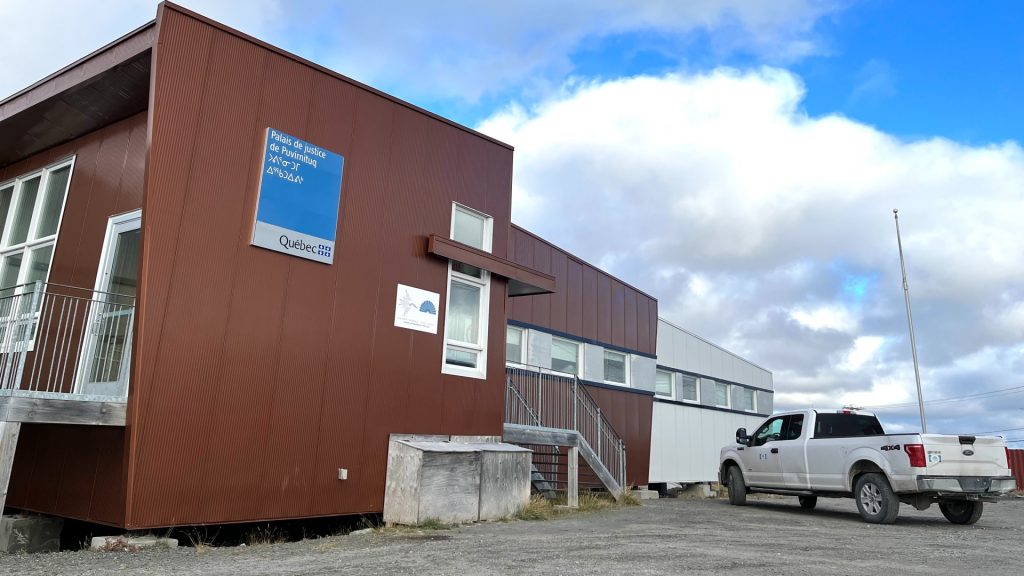
Judge Thierry Potvin, who until February 2025 coordinated the Abitibi-Témiscamingue–Eeyou Istchee–Nunavik region, said during a May hearing that the travelling court wouldn’t be able to travel to the two Inuit villages for trials because of an accommodation shortage. He called having to make the announcement “the worst day” he could imagine.
Thierry Potvin, Judge of the Court of Quebec
“I have been working with [the people of Nunavik] for 21 years. I consider some of them friends, and all I can do is watch as they’re treated like second-class citizens. I find that completely unbearable.”,” he stated.
Defense lawyer Virginie Dallaire said postponing the trials will have catastrophic consequences for several of her clients, violating their rights.
“I have an enormous number of clients who just learned their trial will take place in January 2027. They’re calling us to say they don’t want to wait [until then] and want to plead guilty,” she said.
Some Nunavik residents spend months in pre-trial detention in southern Quebec, far from their families and communities. Those released on bail often face no-contact orders that can be especially difficult to follow in small villages with only a few hundred people.
Bail condition breeches are also high in Nunavik due to the small size of the communities, combined with a lack of resources and housing, on top of the long delays before trial, Dallaire said, leading to the over-criminalization and over-incarceration of Nunavimmiut. Approximately 1 in 16 Nunavik residents is incarcerated, according to 2019–2020 data.
Between 2019 and 2020, about one in 16 Nunavik residents was incarcerated.
“In no other judicial district do people have to wait repeatedly to get a trial, a preliminary inquiry, or court time,” another lawyer working in the region said, saying the situation leads to clients being discriminated against compared to people elsewhere in Quebec.
There are no permanent judges or lawyers in Nunavik. Instead, the 14 communities rely on a circuit court. For each session of the circuit court, court staff, judges, defense attorneys, and Crown prosecutors travel from other regions of the province.
But the Nunavik justice system issues are not new, and reports have documented and condemned the failings for years.
In 2022, attorney Jean-Claude Latraverse was asked by the Quebec Ministry of Justice and Makivvik Corporation, the organization representing Nunavik Inuit, to do a a report on the Nunavik circuit court, shortly after the an investigative report series by the Radio-Canada program Enquête.
He made 60 recommendations aimed at reducing delays and increasing community involvement including better case management, expanded use of videoconferencing, mandatory training for defence lawyers, reopening the permanent office of the Director of Criminal and Penal Prosecutions (DPCP) in Kuujjuaq, and hiring additional court interpreters.
Four years on, slow progress
While some of his recommendations have been implemented, meaningful improvements have yet to materialize, Latraverse said.
“It’s been very slow, especially when it comes to the judiciary,” he said.
“It’s still bush justice,” said Guillaume Michaud, president of the Association des procureurs aux poursuites criminelles et pénales (APPCP), the association representing Quebec Crown prosecutors, who has long warned about the situation.
“It’s not enough,” he said. “There aren’t enough court sittings, and victims don’t receive enough support.”
“We’re not delivering the same quality of justice in the North as we do in Quebec City, Montreal or Amos,” Michaud added.

The Justice Ministry says it’s completed, or begun implementing, 22 of the 27 recommendations directed at the department, including several aimed at improving the technology used for virtual hearings.
Between April 1, 2025, and Jan. 31, 2026, 88 per cent of bail hearings were held by videoconference or telephone.
The ministry also says it’s established a new directorate dedicated to the circuit court in 2025 to improve its day-to-day operations and management.
The provincial government has also committed $7.5M over five years to infrastructure, equipment and technology, as well as interpreter and court clerk services, community workers and legal aid clinics.
Exhausted lawyers and prosecutors
Court dockets are routinely overbooked, with more cases scheduled than can be heard. Lawyers say the court may schedule 30 to 40 hours of trials in a single day, expecting that some will resolve quickly while knowing not all can proceed.
Those conditions are untenable for her clients, Dallaire said.
“It’s difficult for lawyers, but it’s even harder for an accused person or a complainant who is told to be at the courthouse at 9:30 a.m. and then wait until 6, 7 or even 8 p.m. Sometimes their children are home alone. It raises questions about access to justice.”
Delays only make matters worse. When a trial is postponed, the process often has to begin again, another lawyer practising in the region said, adding that repeated postponements discourage victims and witnesses from returning to court.
The courthouse waiting room is overcrowded and lacks basic amenities, including drinking water, she said.

Prosecutors are doing the best they can under the circumstances, Michaud said.
“They start early in the morning and finish late at night. Every day, on top of what happens in court, they have to prepare witnesses, meet with victims, continue building their cases, speak with police officers and speak with defence lawyers who may want to settle their cases.”
The days seem to never end, said Virginie Dallaire, who often works in Nunavik.
“Working conditions are extremely difficult,” she said. “When I’m in court, it’s not unusual for proceedings to run until 8 or 9 p.m., without even having time to eat dinner.”
Recently, a shortage of accommodations forced Dallaire to fly back and forth between Puvirnituq and Salluit every day for several days while representing a client, returning to her hotel around 9 p.m., only to do it all again the next morning.
Several lawyers have complained that the working conditions fall short of basic labour standards, but tthere’s yet to be any meaningful response, Dallaire said.
“You stop having a life. After a while, you lose the motivation,” said Jean-Claude Latraverse, who spent years working in Nunavik as a prosecutor and a defence lawyer. “Once you get there, you’re largely on your own. There’s very little support, and the infrastructure simply isn’t there.”
Defence lawyers and Crown prosecutors frequently end up on sick leave, he said.
Charges withdrawn before trial
As court delays mount in Nunavik, prosecutors routinely withdraw charges before the verdict, a practice known as nolle prosequi.
In 2024, the travelling court saw 106 cases withdrawn because they were at risk of exceeding the time limits established by the Supreme Court of Canada’s Jordan decision, which generally requires criminal cases to be brought to trial within 18 months in provincial court or 30 months in superior court.
“Because the circuit court visits communities only a few times a year, it doesn’t take many adjournments for a case to be stayed,” Michaud said.
Faced with the risk of a stay of proceedings under the Jordan decision, prosecutors sometimes choose to withdraw charges or resolve cases through plea agreements, even if that results in lighter sentences.
“Are court dockets overflowing because there aren’t enough court sittings, or because too many charges are being approved?”Louis-Nicholas Coupal, a lawyer who has worked in Nunavik, said.
“Either way, the access-to-justice crisis is real, and it’s tragic for crime victims.”
The withdrawal of charges can also deny justice for the accused, said one defence lawyer, who asked not to be identified.
“They never get the chance to have a judge declare them not guilty of the charges against them,” she said. “Yes, it brings the proceedings to an end, lifts bail conditions that can be extremely difficult to follow, and removes the risk of a conviction, but it also takes away their chance to declared not guilty.”
Looking for solutions
Adding resources would ease the burden on court workers and help reduce the backlog, but it wouldn’t address the root cause of the issues, Latraverse said.
“Adding more weeks of court won’t solve the problem” he said. “Reducing the number of cases will.”
To reduce the caseload, prosecutors would need to make greater use of negotiated resolutions and agree on sentences instead of taking every case to trial, he said.
“It’s a cycle that will never end as long as crime rates remain high.”
At its core, the problem isn’t legal, it’s social, Latraverse said.
“The justice system can’t solve all of society’s problems. In Nunavik, the courts are the first and last resort.”
— Jean-Claude Latraverse, former prosecutor and defence lawyer
Governments need to make significant investments in social services to turn things around, he said.
Lawyer Louis-Nicholas Coupal agrees.
Despite the expanded use of videoconferencing, he said court dockets remain overloaded, leading to repeated adjournments.
“We have to ask ourselves whether, beyond simply adding more court sittings, support staff, infrastructure and legal professionals, what we really need is a fundamentally different approach.”
The answer lies in rethinking the justice system to place far greater emphasis on social services, healing and support for victims, Coupal said.
Radio-Canada’s Espaces autochtones contacted Inuit organizations for comment, but did not receive responses.
With files from Daniel Leblanc
This story has been translated from the french: La population du Nunavik encore laissée pour compte en matière de justice
Related stories from around the North:
Canada: Justice system in northern Quebec straining at the seams and devastating victims, say Crown prosecutors, Eye on the Arctic
Finland: Police response times up to an hour slower in Arctic Finland, Yle News
United States: Violence Against Women bill would expand power of up to 30 Alaska tribal courts, Alaska Public Media