A board member with the state-owned Alaska Gasline Development Corporation, which is a part owner of the proposed AKLNG gas line project and pushing for lawmakers to provide a multibillion dollar tax break, likened state legislators to mosquitoes — “irritating, relentless, and somehow always present” — at a board meeting on Thursday.
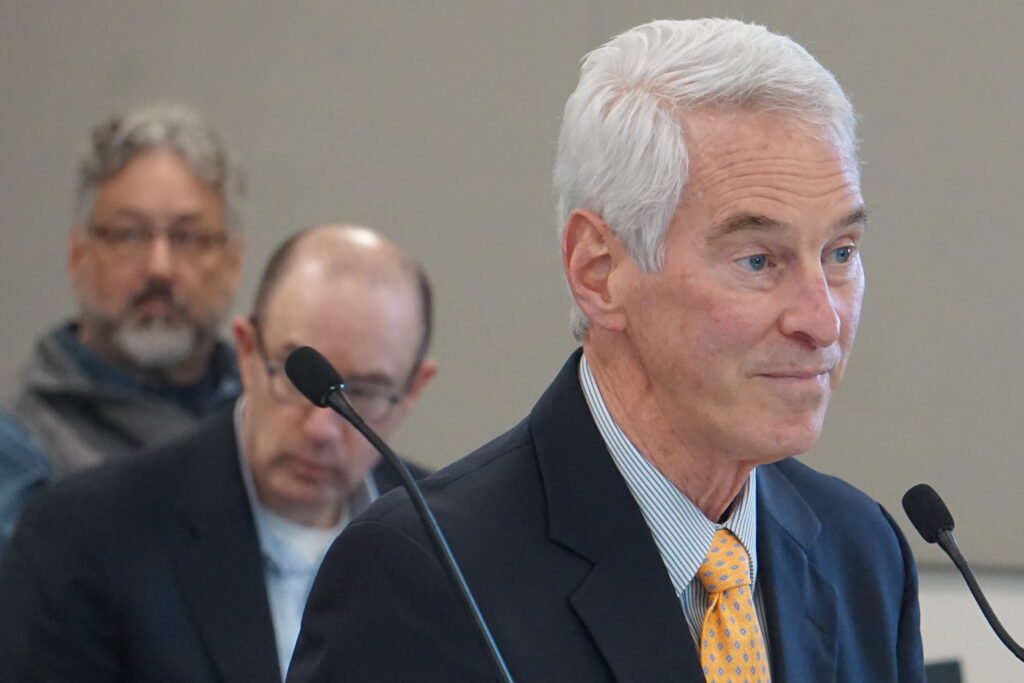
The “tongue-in-cheek” comparison came from Fairbanks-based secretary and treasurer of the board Dennis Michel as the corporation grapples with lawmaker scrutiny after the leak of a confidential document revealing potential state financial liability in the project.
Some legislators found the comparison to be demeaning as they continue to debate the specifics of a state tax break for the project that is estimated by the developer to cost up to $55 billion, which would include a 807-mile gas line and gas treatment facilities. The comment and some lawmakers’ reaction highlights the tension in the working relationship between the groups.
Lawmakers are now in a second special session called by Gov. Mike Dunleavy. A conference committee of six legislators are negotiating a compromise bill from competing House and Senate proposals.
Lawmakers have been largely supportive of the AKLNG project that would deliver natural gas from the North Slope. But Senate lawmakers and Dunleavy have split on details of the plan. Lawmakers are weighing provisions to provide increased protections for Alaskan gas consumers, a community impact fund, labor-related provisions, disclosure agreements for foreign investors and provisions to protect the state if the project fails to move forward, among others.
The state-owned Alaska Gasline Development Corporation is a 25% owner of the project, while Glenfarne, a private developer, is a 75% owner, after AGDC handed over ownership last year.
The AGDC board includes seven members, including five members appointed by Dunleavy and two commissioners with the Alaska Department of Transportation and Public Facilities and the Alaska Department of Commerce, Community, and Economic Development.
The mosquito-themed remarks came one day after the Alaska Beacon reported on a confidential draft analysis of an agreement between AGDC and Glenfarne that shows if the project failed to move forward under some conditions, the state could be required to pay in order to take back the project.
The document was shared with some lawmakers, but not others or the public, and it informed some Senators in questions to the developer and their push for further protections on the proposed tax break proposal.
At Thursday’s virtual board meeting, officials with AGDC said they had launched an internal investigation into how the confidential document was shared. AGDC President Frank Richards called the disclosure “bad for AGDC” and its relationship with private investors.
On Thursday, AGDC board members expressed strong support for a state approved multibillion dollar tax break to benefit the project, and heard a detailed update on the current negotiations and proposed provisions being debated in the Legislature.
At the end of the nearly two-hour meeting, Michel, the Fairbanks-based board member, made the comments in what seemed like prepared remarks. He prefaced the remarks as “tongue in cheek” before he likened lawmakers to mosquitoes seen in the Interior.
“A mosquito can turn a peaceful evening into a defensive operation. A Legislature can turn a straightforward issue into a long campaign of hearings, amendments, delays and procedural buzzing,” Michel said. “Both are persistent, too. A mosquito can keep circling until it finds bare skin. Lawmakers circle around taxes, amendments, compromises until it finally lands, or at least until someone, everyone in the room, has been bitten by the process.”
Michel said he hoped the legislative conference committee would “stop hovering” and agree to a workable tax cut for the developers.
“So, yes, mosquitoes in the Legislature are both part of life in Alaska, irritating, relentless, and somehow always present just when people are trying to get something done,” he said.
“But even mosquitoes can be a sign of something good ahead,” he added. “More mosquitoes often mean more blueberries here in the Interior. And in the same spirit, I hope that the legislators and their sessions produce more than welts and frustrations, but ultimately deliver something of value to the citizens of Alaska.”
No other board members responded to the comments, and the meeting ended shortly after.
Several lawmakers were on the call, including Sen. Cathy Giessel, R-Anchorage, who chairs the Senate Resources Committee. She has been highly involved in drafting legislation around the AKLNG project and serves as a non-voting senate representative to the board.
She called the comments “outrageously demeaning.”

“He is an unelected person who has been appointed as a political favor to a board with no oversight by any elected individuals in the Legislature, and he was demeaning representatives of the people who have been elected,” Giessel said in an interview on Friday.
“(The comments) demonstrate to me the cavalier attitude that this board has toward the governing body of the Legislature, the one of the branches of government, and that concerns me a great deal,” she said. “This is a generational change project and we need to be working together.”
Rep. Donna Mears, D-Anchorage, who serves on the House Resources Committee also attended the hearing. She said the comments were “not acceptable.”
“The Legislature has got a duty that is larger than the AGDC board. We have a responsibility to our communities, we have a responsibility to rate payers. Yes, this project can bring a lot of benefit to the state, but we also have to make sure that we’re not running over our communities and our ratepayers in the process,” she said in an interview Friday.
During a break in the conference committee hearing, AGDC president Richards said in an interview he did not want to speak for Michel. “He was trying to identify that as tongue in cheek,” Richards said. “And really I think maybe expressing some frustration about the lengthy process, and about what’s been happening, the back and forth.”

“There’s this, sounds like tension, you know, that in the arena of the legislature that we want to be able to get through and achieve an economic project,” he added. “And that’s really the goal of what we’re going to do with the property tax, alternative volumetric tax provisions.”
When asked about lawmakers’ reaction, Richards said he did not have a comment, but added: “I certainly can see the perspective of hearing the words that were said and their personal reaction.”
Both Giessel and Mears noted ongoing concerns about a lack of transparency from AGDC and Glenfarne on the proposed gas line project, amplified by the reporting on the confidential draft agreement this week.
Lawmakers have been asking Glenfarne and AGDC for more detailed financial information for months. Glenfarne released an updated estimate for the project’s cost earlier this month at up to $55 billion, but state lawmakers say they still don’t have all the financial information they’ve been seeking, including estimates about the project’s profitability.
Giessel said she’s particularly concerned about confidential agreements with foreign investors. She authored provisions approved by the Senate to provide more state oversight of foreign entities and cost overruns.
“I think there’s been such distrust sown in this project that I don’t see how we can proceed forward at this point,” Giessel said. “It almost feels like there needs to be a restart where everybody comes to the table and stops hiding the ball, stops hiding the information, and the disrespect and demeaning language stops, and we start over with mutual respect and mutual collaboration.”
Mears said the legislators with the conference committee currently working on a final bill have an “enormous burden” to hammer out a compromise. She said if lawmakers still need more information, they should get more time to do their work.
“I think the information coming out this week is exactly why rushing a process is unacceptable,” she said, referring to the information in the confidential draft analysis.
“Maybe the thought that the Legislature is annoying is true,” Mears said. “Because the truth sure seems to be inconvenient. We would have a much better process starting from what we know now, and those of us that have been asking for more information for months are not wrong.”
Members of the conference committee are scheduled to meet publicly on Friday and Saturday. The Legislature is scheduled to reconvene on Wednesday July 1, but it’s uncertain whether a compromise bill will be finalized by then.