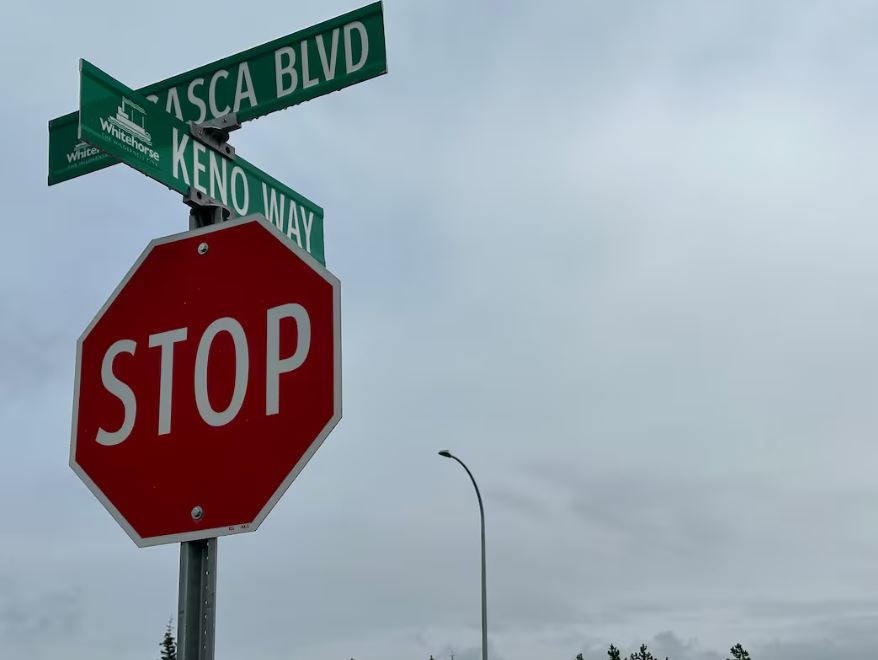

Some Whistle Bend residents say they want their governments to get out of the weeds when it comes to maintaining roadsides and boulevards in their newly developed Whitehorse neighbourhood.
Residents say the City of Whitehorse and the Yukon government are at odds over who is responsible for landscaping and maintaining areas along streets within the newer phases of development in Whistle Bend.
Residents are calling it a jurisdictional grey area that comes down to the transfer of land responsibility between the territory and the city as development booms in the growing subdivision in the city’s north end.
Construction began in 2010 and several phases of development are still ongoing or have yet to start. With more than 4,700 people living in Whistle Bend — according to data released in March 2026 by the Yukon Bureau of Statistics — it’s the fastest growing neighbourhood in the Yukon’s capital.
In an email statement to CBC News, the city’s spokesperson, Matthew Cameron, said the territorial government develops the land and the city is responsible for taking over maintenance only after the land is completely developed.
That has happened for some, but not all areas of development, such as Casca Boulevard — one of the main roads in and out of the subdivision, Cameron said.

The city and the Yukon Department of Community Services declined interviews about the issue.
An email statement attributed to Wayne Potoroka in community services said the territorial government is following the city’s master plan to develop the subdivision.
Generally, the territory finishes landscaping as part of the development process, Potoroka said. Once the initial landscaping and maintenance work is done, then ownership and responsibility transfers to the city.
“Cutting the grass on boulevards is typically a municipal responsibility,” Potoroka said.
“We are currently working with the City of Whitehorse on understanding their issues with how the boulevard was constructed and transferring responsibility of Casca Boulevard to them.”
-
Contentious industrial development in Whitehorse prompts public backlash
-
City hearing on Whitehorse mineral exploration project shows deep divide among residents
Kylie Campbell-Clarke heads the Whistle Bend Neighbourhood Association.
She calls it “ridiculous” that no one is being held accountable for landscaping and maintenance work. She says it becomes a problem beyond phases 1 and 2 of development in the subdivision.

According to a Yukon government planning map, at least 15 phases of development are planned so far.
“Currently, we’re experiencing difficulties in getting the governments to manage the boulevards. They’ve been outgrowing and become a problem even for driving,” she said.
“No one’s taking responsibility and it’s just getting out of control.”
In particular, Campbell-Clarke is among those concerned about the spread of sweet clover, which is taking over plant growth along some streets and in greenspaces throughout Whitehorse.
“What’s happening is invasive species are becoming prolific and spreading like wildfire in the areas, and they’re only getting worse because nothing’s being maintained,” she said.
“This is a prime example of, you know, them not communicating with each other appropriately and in part, we suffer as a neighbourhood.”
-
Invasive plants are available across Canada. Is federal regulation possible?
-
Bug-eating plant found near Iqaluit, far north of usual habitat
Sweet clover has been a catalyst for action around landscaping and maintenance lately in Whistle Bend.
Not only is it considered an invasive species in the Yukon, but it can grow as tall as a person. Campbell-Clarke said it can pose a safety risk when it impedes visibility around crosswalks and intersections.
Growing out of control
Whistle Bend residents are taking the management of sweet clover into their own hands.
In August, they held a community pull to get rid of the sweet clover.
Campbell-Clarke said they filled about 30 garbage bags with weeds.
Bruce Bennett, a local scientist who studies plants, says unwanted species are slowly creeping north and changing the dynamics of ecosystems.
Invasive species can offer fodder for wildfires and attract wildlife to highways, he said.

The Yukon Invasive Species Council is trying to stop the spread of sweet clover in the territory.
Introduced in Dawson City as a crop nearly a century ago, sweet clover is now choking out native species in parts of the region, said Seth Brown, the council’s executive director.
He said local governments currently have no plans in place for managing sweet clover’s unfettered growth in the territory.
The council is pushing for early detection and rapid response to sweet clover in order to prevent its growth in undesirable locations.

Governments at a crossroads
While citizens are stepping up to remove sweet clover in Whistle Bend, local governments are at a crossroads over who is responsible for maintaining roadsides and boulevards in the community.
A Yukon government news release issued this past spring said work planned over the summer and fall involves landscaping and planting trees along boulevards and lots in Whistle Bend, and starting tree clearing and site preparation for future phases.
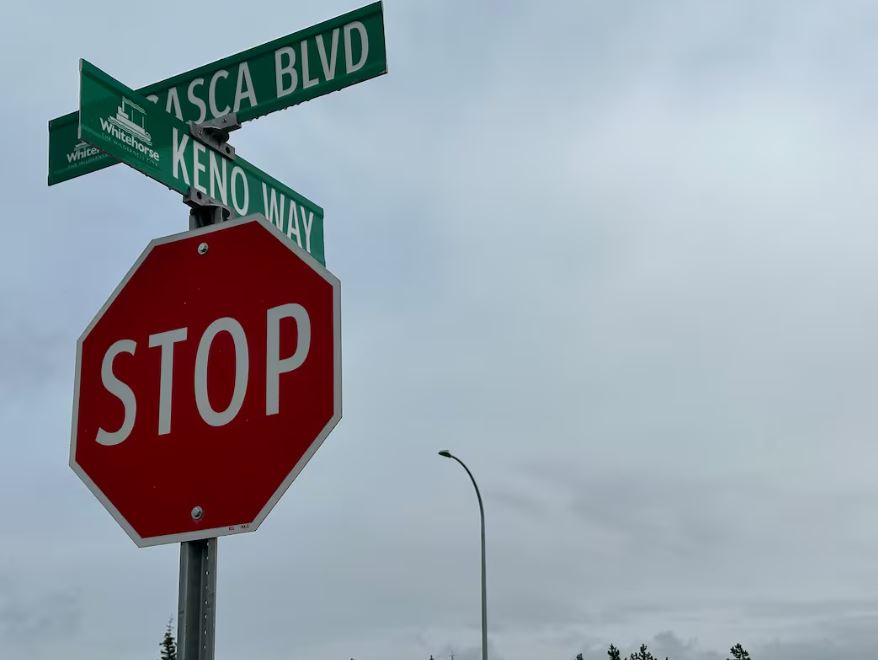
Cameron, the city’s spokesperson, said the two governments are working together to address residents’ concerns around landscaping and maintenance, with the goal of getting the work done in areas that are almost complete, including Casca Boulevard.
“This can take time since multiple parties are involved in the process,” including governments and contractors, Cameron said.
Related stories from around the North:
Canada: Yukon University student says unwelcome weeds could support mine remediation, CBC News
Norway: Climate change is driving micro-algae blooms into High Arctic and may affect food chains, says study, Eye on the Arctic
United States: New study predicts ‘radical re-shaping’ of Arctic landscape by 2100, CBC News