
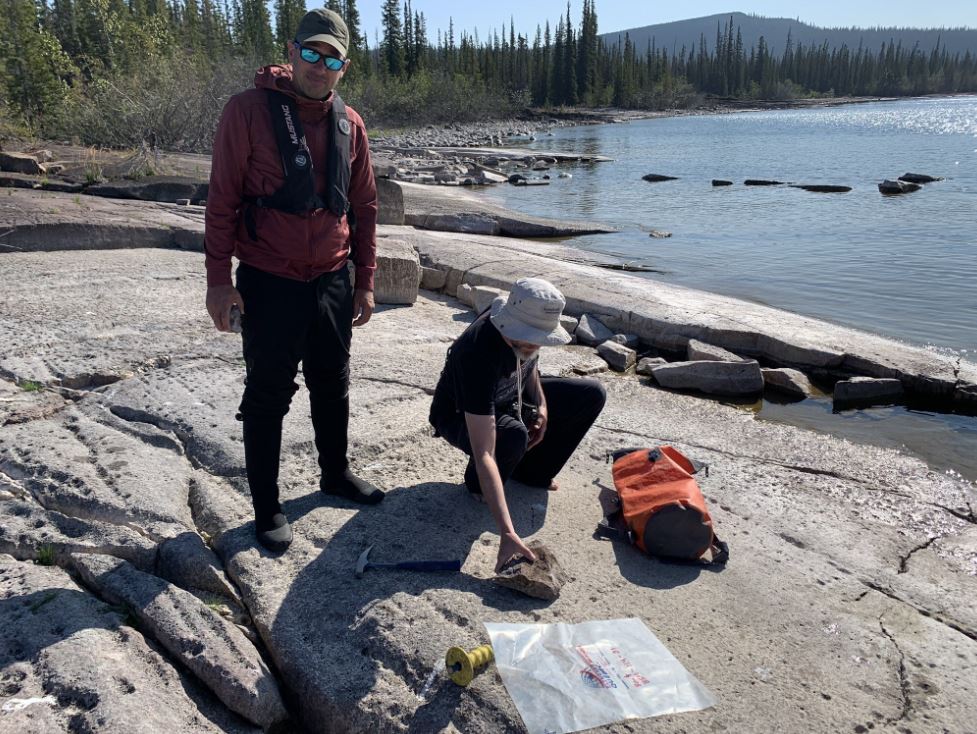

In the face of the climate emergency, the answer to our dependence on fossil fuels might just lie right beneath our feet. The Institut national de la recherche scientifique (INRS) has announced the awarding of a Tier 1 Canada Research Chair to Professor Jasmin Raymond.
Backed by $1.4 million in funding, this initiative aims to harness the potential of the Earth’s crust to drive the energy transition, particularly in the country’s most isolated regions.
For rural, remote, and Indigenous communities in the Canadian North, access to clean energy remains a significant challenge. As a result, these populations remain heavily reliant on polluting and costly sources, such as diesel.
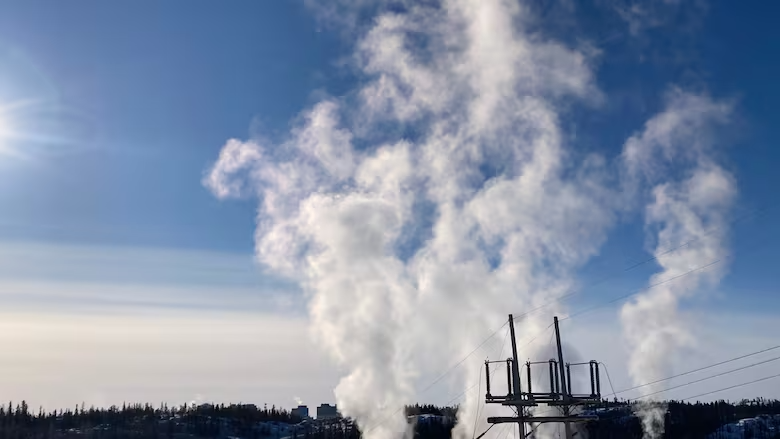
It is precisely to break this dependence that Professor Jasmin Raymond and his team at the INRS Water Earth Environment Research Centre are deploying their research directly in the field, spanning from the Northwest Territories to the extreme conditions of the Arctic.
“Very little scientific work is conducted in these remote communities,” the researcher notes.
Yet, it is crucial to focus on them to strengthen their energy sovereignty and reduce the environmental toll associated with their dependence on fossil fuels.
Funded by the Natural Sciences and Engineering Research Council of Canada (NSERC) at $200,000 per year over seven years, the work of the new Canada Research Chair in Sustainable Geoenergy Systems Analysis will center around three major technological pillars.
1. Geothermal Energy for Northern Autonomy
Professor Raymond is banking on geothermal energy to meet heating, cooling, and electricity generation needs.
The objective is to adapt technologies already proven in subarctic zones and transpose them to the Franklinian Basin in the High Arctic, offering a green, continuous alternative to diesel generators.

2. Green Hydrogen to Store Wind Power in the Magdalen Islands
The second facet of the Chair tackles a major hurdle of renewable energy: intermittency. In the Magdalen Islands, where the power grid still largely relies on a local thermal power plant, wind energy is experiencing rapid growth.
To stabilize this grid, the scientific team is studying the feasibility of converting surplus clean electricity into green hydrogen, which would then be stored underground on a massive scale.
According to the INRS, the salt-rich subsurface of the Magdalen archipelago is uniquely suited for creating vast underground storage caverns, ensuring a continuous energy supply even on windless days.
3. The Promising Pathway of Natural Hydrogen
The Chair is also exploring an emerging resource: geological hydrogen. Unlike human-made hydrogen, this resource is already present in the Earth’s crust, and its extraction would emit zero greenhouse gases.
INRS scientists are currently focusing their exploration efforts on the Mistassini and Otish basins, located north of Chibougamau.
“Natural hydrogen is highly promising,” says an enthusiastic Jasmin Raymond.
It could transform the energy landscape by addressing several transition challenges, notably the intermittency of renewable energy supplies, long-distance transportation needs, and the requirements of certain industrial sectors that need high-temperature heat.
Related stories from around the North:
Canada: Yukon gov’t torches Clean Energy Act, subsidies for EVs and e-bikes, CBC News
Finland: Flooding in Finland is getting worse, new climate report says, Yle News
Iceland: Iceland sees security risk, existential threat in Atlantic Ocean current’s possible collapse, Reuters
Greenland: Facing rapid Arctic warming, Inuit call for full voice in COP30 climate decisions, Eye on the Arctic
Russia: Mining boost in Russian central Arctic to feed electric vehicle market, The Independent Barents Observer
Sweden: Giant battery factory bringing economic boom to Northern Swedish city, Radio Sweden
United States: Alaska’s first, electric public transit bus ready to hit Anchorage streets, Alaska Public Media