Kenai River bait closure regulations are now in effect year-round on the middle river. Nick Ohlrich breaks down what anglers and guides need to know.
Why Upper River Guides Pushed for Change
The bait closure on the Kenai River from the outlet of Skilak Lake downstream to the Moose River went into effect last season (2025) and remains in effect year-round. As with many new regulations/emergency orders concerning the Kenai River, there is a mixed bag of reactions ranging from those against, for, and everything in between. Speculation and emotions often take precedence over facts regarding contested issues like no bait and resource conservation. The Cooper Landing Advisory Committee was responsible for bringing this closure to fruition. Josh Hayes, a long time Kenai guide and chair of the Cooper Landing Advisory Committee graciously spent time answering my questions and unpacked the facts.
Many are wondering why a group of guides on the upper Kenai River (Kenai Lake to Skilak Lake) are implementing regulations for a section of river they really don’t spend much time fishing.
The upper river guides, in a sense, are the “canary in the coal mine.” First-run silvers can be found in the Russian River (a tributary to the upper river) as first-run salmon are typically tributary spawners, while second-run salmon are mainstem spawners and can be found all the way to Kenai Lake. Concern amongst these guides was growing over the past several years as they noticed fewer silvers returning to the upper river. Is it a decrease in the overall run? Are too many fish being harvested below Skilak Lake? Little is known about silver returns, migration patterns, etc. Fish and Wildlife began doing a multiyear telemetry study starting in 2022, and ADF&G joined in during 2023 and 2024. Trying to manage a species like silver salmon with limited data can easily lead to mismanagement and an unintended reduction in future returns.
The Case Against Bobber and Eggs
The bait closure was viewed as a precautionary approach. All are witnessing what happened to Kenai kings, the data-driven reality seen by 2012, and the continued mismanagement of that species to near extinction.
Thankfully, a group of concerned guides acted. The primary driver for the bait closure was the prevalent use of bobber and eggs in the middle river, a highly effective means of catching silvers. Just because something is legal does not always mean it is right. Silvers often swallow a hook rigged with eggs, which is great as these fish typically do not get off and silvers are delicious. The problem lies in hooking silvers that are staging to spawn or are too dark to keep. Releasing a fish you do not intend to keep with a swallowed hook leads to a high mortality rate. Meat quality declines quickly in silvers; a slightly blushed fish can yield whiteish meat of poor eating quality.
What about plugs wrapped with sardines? Wrapping sardines on a plug with a single hook rarely leads to a fatal hooking wound. I have filled many limits of silvers and successfully released them using sardine-wrapped plugs and single hooks. However, I cannot speak with authority about treble hooks as I have never used them for multiple reasons. Regardless, the bait closure means no wrapping plugs with bait.
Why did the closure extend to the Moose River? The two main reasons: First, the Moose River is an easy-to-see landmark. Second, 90% of silvers harvested are caught downstream of the Moose River.
My Perspective
The news of this bait closure delighted me while infuriating many. As a guide, I make my living off this resource and appreciate measures that aid in keeping it intact and want the same opportunities for others once my time on the Kenai comes to an end. As a co-owner of Alaska Drift Away Fishing, our decision from the start of our business in 2005 to not use eggs had more to do with avoiding hooking giant rainbows which often hang out in the areas folks target coho with bobber and eggs. How many giant ’bows have died due to swallowing a 2/0 hook baited with eggs? We don’t know.
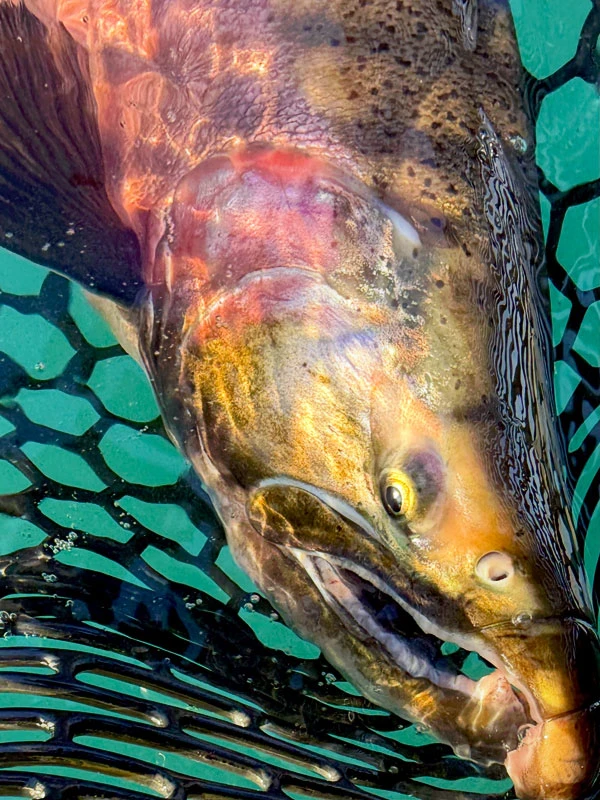
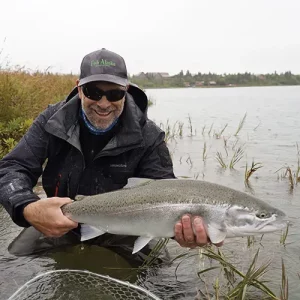
This blushed buck made for a great photo. The meat quality of this guy would be less than desirable. Fortunately, he fell for a single-hook spinner allowing a client an epic fight, and the fish swam away to hopefully spawn.
I also know of several guide operations who sold silver/trout combo trips and I suspect some were using bobber and eggs with the intention of hooking giant rainbows. Once again, just because it is legal does not make it right. Guides should be a steward of the resource and lead by example. Unfortunately, there are many who put the need to be a hero for their clients in front of protecting the resource that puts food on their tables and the lights on in their homes. I have never understood it and never will.
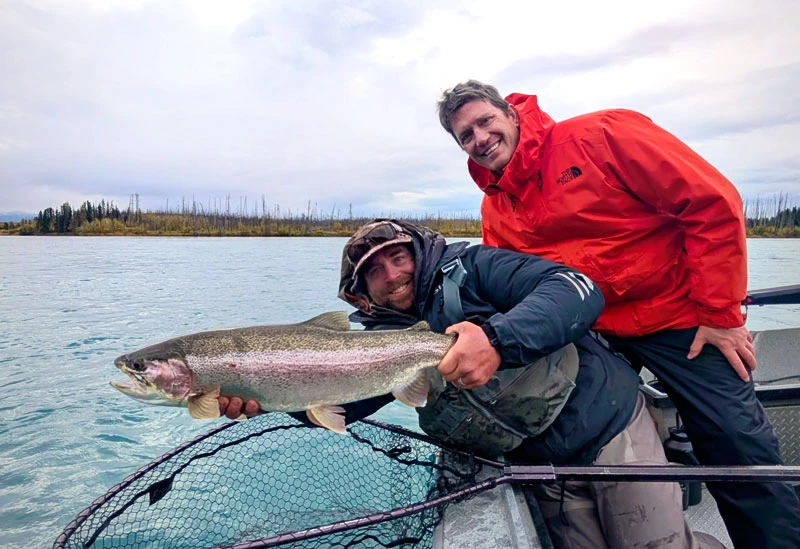
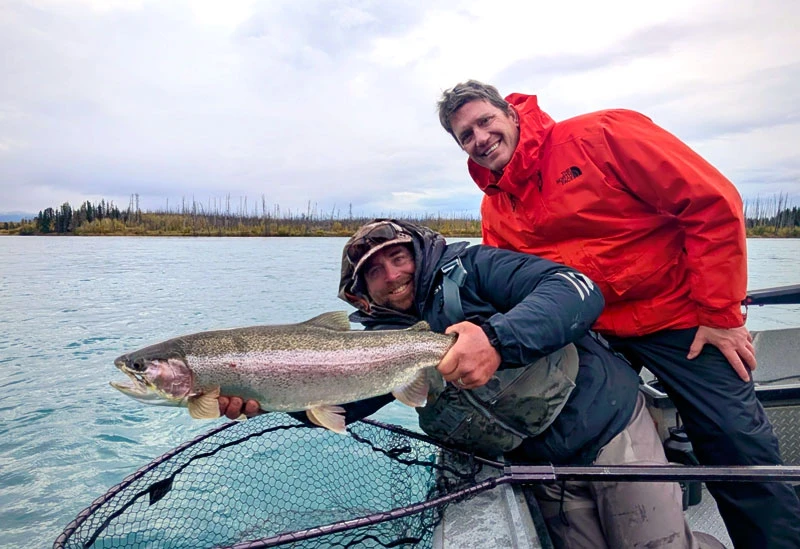
While I don’t use real eggs, well over 100 plastic patterns live in my tackle box. This beast fell for one of them. Using the proper setup for a fish you intend to release keeps the Kenai the epic fishery it has been and should be for future generations.
The Lesson the Kenai Already Taught Us
Personally, I would be fine if single-hook artificial lures became the norm for the entire Kenai River system. Years ago when this was implemented on the Kasilof River during the first run of hatchery king salmon, I was stoked, as a strong percentage of the guide fleet chose not to participate in the fishery because they couldn’t use bait. Catching a king without bait is harder and requires some creativity, but less boats on the water kept the bite tempo similar to a bait fishery and more enjoyable with less competition.
We have seen what poor management, trawler bycatch, and self-interest from the local commercial fisherman and the guide fleet—by placing money over resource preservation—has led us with king salmon. The result? Guides whose bread and butter came from the June and July Kenai king fishery are out of a job. Generational set-netters are out of a job. And the drift-gillnet fleet cannot come within two miles of the shore. We have seen what happened to the Pacific Northwest salmon stocks due to similar reasons. This time is not different. “History doesn’t repeat itself, but it often rhymes,” – Mark Twain
Nick Ohlrich is co-owner/guide of Alaska Drift Away Fishing. Please go to guidekenairiver.com for more information.
The post Middle Kenai River Bait Closure appeared first on Fish Alaska Magazine.